The Left Hand of Darkness
URSULA K. LE GUIN, 1969 — A RECOMMENDATION IN THE AUTHOR’S OWN MANNER
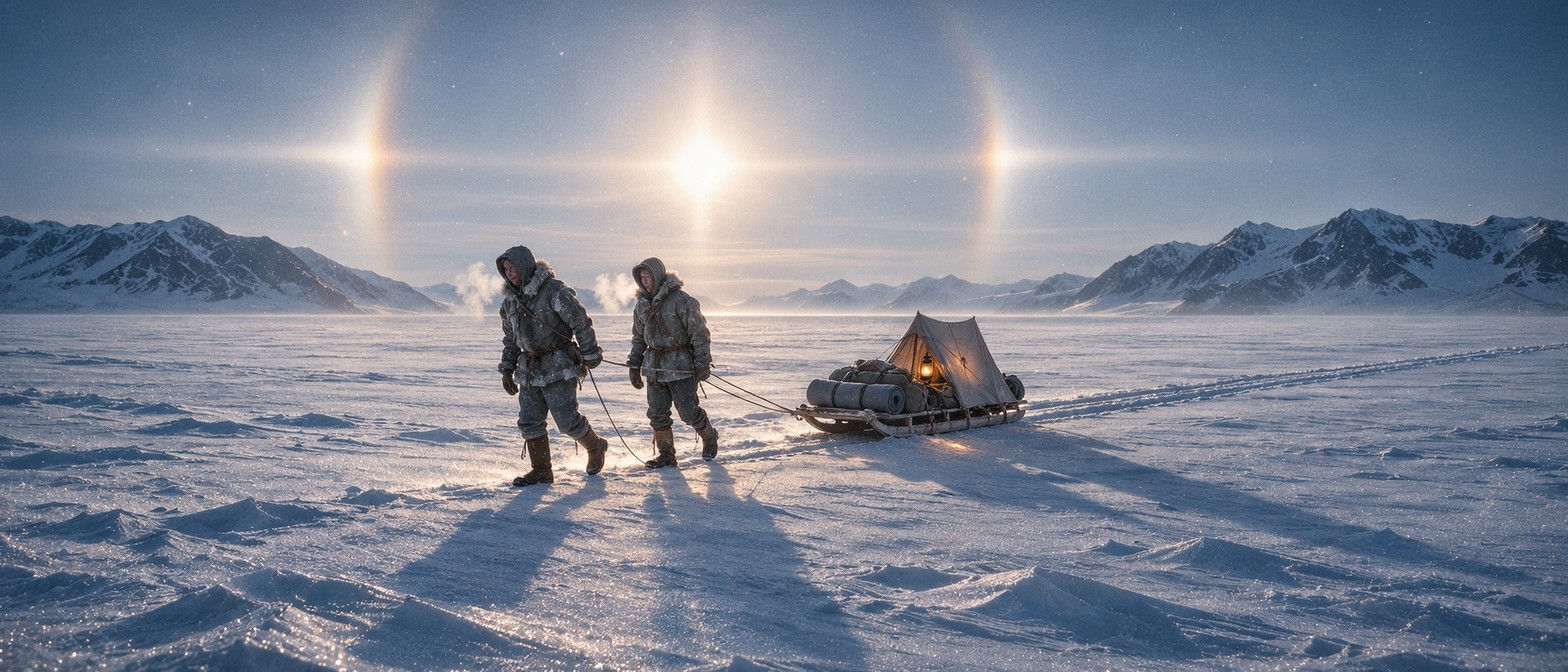
On a world called Winter, cold is not just weather but custom. It pares a life down to what endures: breath rising, a cup of broth, the thrift of hands. Cities quiet themselves under snow, and speech is measured because heat is. People there are not fixed in one sex or the other; they shift with their own seasons, and the old shortcuts of expectation have no purchase. Their courtesies are exact and armored, their loyalties deep and slow, their jokes edged like ice. Into that clarity comes a stranger who walks too quickly, carries warmth like a flag, and offers a future that sounds like a rumor.
The book keeps close to him, and closer to the person who will not abandon him to the wind. Before them stand palaces warm with politics, councils that weigh words as if they were coin, kitchens where steam fogs the panes and the unspoken is counted and kept. You learn how honor looks in a place where to name a gift is to lessen it. You learn what trust costs when it must be paid in patient days and frostbitten nights. There are riddles answered by a marriage of trance and arithmetic, and a rite that seems to ask the sky itself for a verdict.
Where the story turns, it does not trumpet. Its moves are as deliberate as a boot finding ice beneath powder. The pleasures are near at hand: a strap unknotted without a word; a map shared mind to mind before ink touches paper; the lift you feel when a companion matches your pace without being asked. When two travelers set out across the blank and blazing country, the pages widen. The land is so spare that every human act grows large. You hear the talk that keeps sleep from becoming snow, the quiet economy of food and strength and cheer, the odd hum of a sled as it rides a hard drift. There are miles in which the idea of trust hardens and holds.
The body, too, astonishes. Not caged by old binaries but competent in other directions, it asks you to reconsider what you think you know about sex, about love, about the form of courage. Desire appears as something neighborly and exacting, not spectacle. Love, when it work-hardens into being, is like a treaty: negotiated, generous, severe. Politics do not melt in the cold; they clarify, as stars do when the wind drops. So do the limits of one person’s vision. The envoy with all his reason must learn a new grammar: how to read a silence as a map, a jest as a warning, a hand on a sledge‑rope as a promise.
I will not tell you how their journey ends. The true invitation is elsewhere: in the way this book teaches attention—how to look at ice until it yields its many textures; how to consider gender as a weather of the self; how to be a stranger without becoming an enemy. It is science fiction that refuses to brag about its science, myth told with the care of field notes, a narrative that wastes nothing: not a spoonful of grease, not a shared breath. You close it and the room seems warmer, quieter. Outside, your own weather looks different, steadier, and your own heart asks for tact you had not known you possessed.