You should know, before we go any further, that this is a book about a tollbooth. Not a particularly impressive tollbooth, as tollbooths go — it arrives in a plain package, requires a good deal of assembly, and when it is finally built it stands in the middle of a boy's bedroom, going precisely nowhere. Which is, as it turns out, exactly the point.
The boy is named Milo, and Milo is bored. Not the ordinary sort of bored, but the spectacular, ceiling-staring, why-bother sort, the kind that makes everything look like a long corridor with nothing at the end of it. Most of us have visited this country. Few of us have noticed that it has a road leading out.
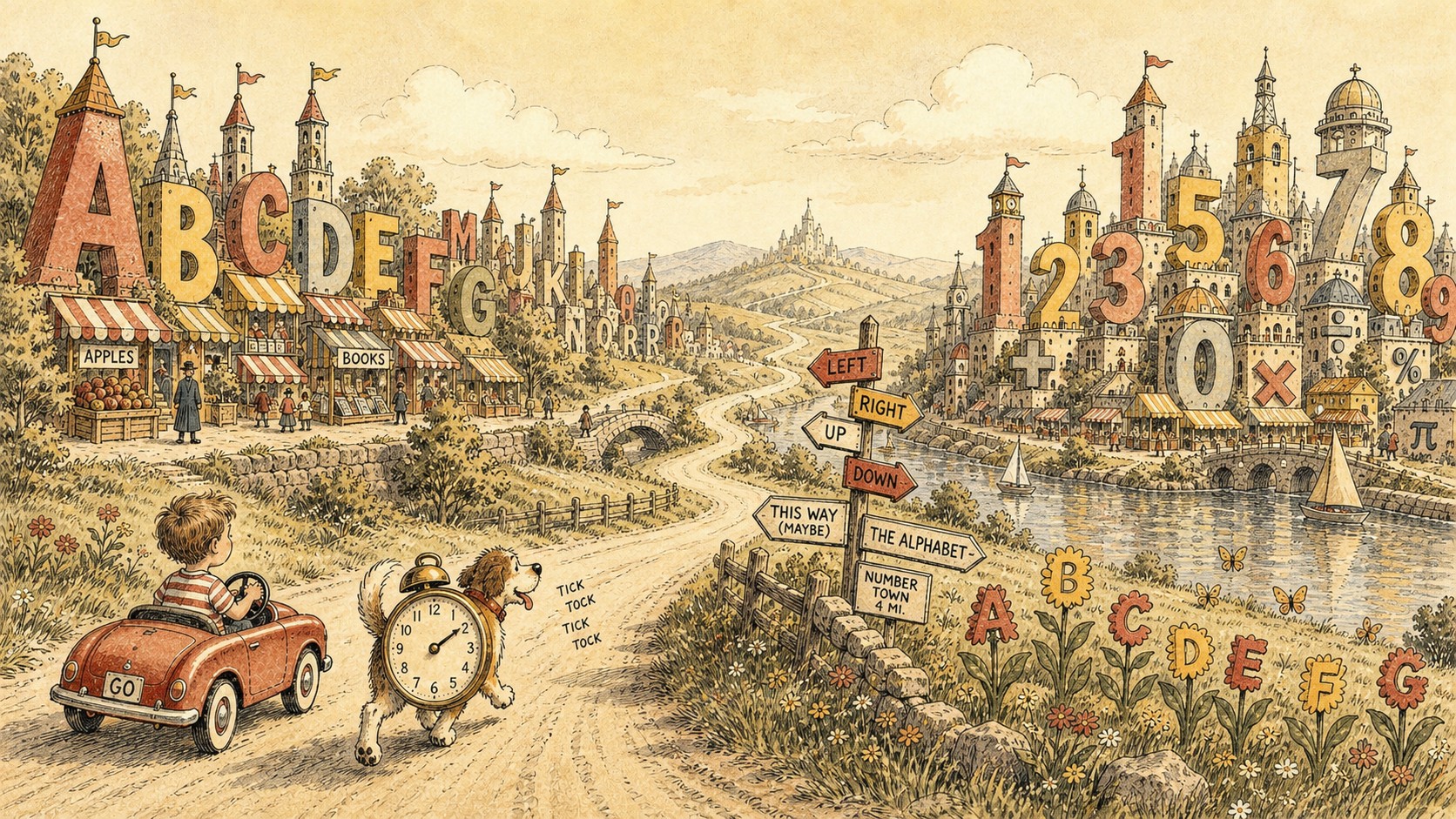
Then a strange thing happens, which is the best kind of thing: the tollbooth works. A car appears (a small one, electric, and rather in a hurry), Milo pays his toll with nothing but curiosity, and off he drives — past the Doldrums, where thinking is frowned upon and standing still is the local sport; into Dictionopolis, a market town where words are bought, sold, and occasionally eaten with spoons; and onward toward Digitopolis, where the numbers live and the miners dig for the rarest jewels of all: ones, twos, and threes.
Along the way Milo collects company. There is a watchdog who insists on punctuality in the most literal fashion imaginable, and a Humbug, who is enormous on advice and extremely short on taking any of it. There are two princesses named, sensibly enough, Rhyme and Reason, who have been locked away — and here is the trouble: a kingdom without Reason is a difficult place to get anything done, and one without Rhyme is scarcely worth the trip.
What Norton Juster does — and this is why the book has refused, for over sixty years, to grow old — is to take the plain materials of childhood and build a world out of them with the seriousness of a watchmaker and the mischief of a magician. Every pun is a door. Every joke turns out to be load-bearing. You come for the adventure and leave, slightly to your own surprise, having been handed a map of how to pay attention.
It is, in short, a book for anyone who has ever been bored, which is to say everyone, which is to say you.
The tollbooth is assembled. The coin is in your hand.
Expect the unexpected — and go.