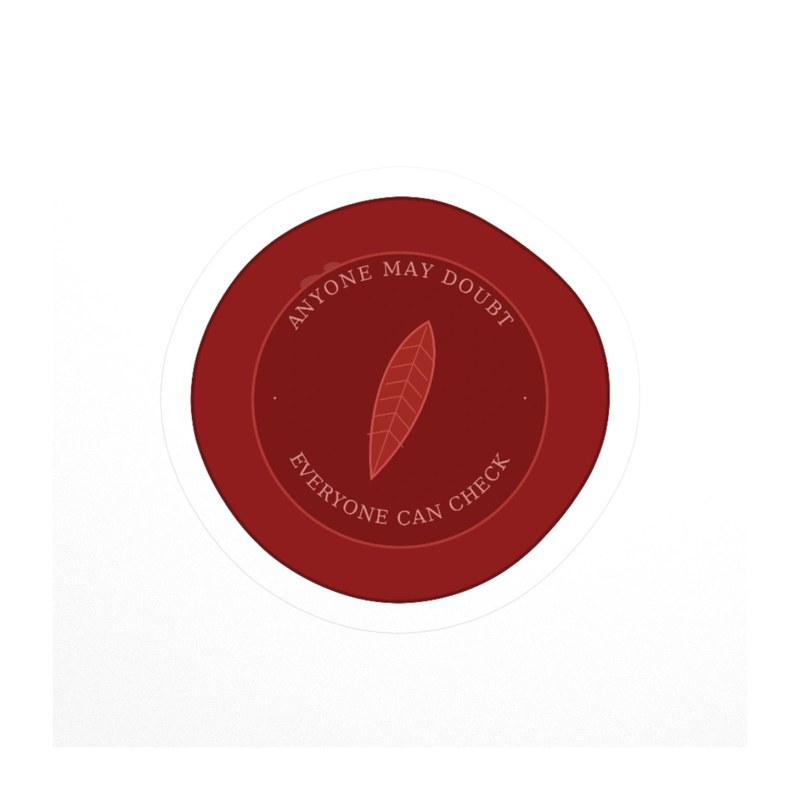
The Apprentice Seal
A FABLE ABOUT RECEIPTS
There was a village of magpies where nothing was true out loud until it could be checked. This was not suspicion; it was courtesy. A magpie who said “the bridge is sound” would stamp the claim and note which beam to tap, so that any doubter could go and tap it. Over the door of the ledger-house, carved deep, ran the village motto: Anyone may doubt; everyone can check.
The fox, passing through on other business, stopped to watch. It had never seen trust built out of so many small, checkable pieces.
The notary of the village was old, and had taken an apprentice — a fledgling so young it could not yet read. It could not write one true word. But it watched. And the first thing it learned was not letters. It was the shape of certainty: where the seal goes, how a ledger line ends in a number, the little flourish that means verified.
Soon the fledgling was producing page after page of beautiful nonsense. Gibberish, stamped. Empty claims, numbered. Citations to ledgers that did not exist, given with perfect confidence down to the volume and the line.
The clerks passed the pages around at lunch and laughed until their feathers came loose. One clerk did not laugh. “Take the stamp away,” she said. “It certifies nothing. It will teach the village to trust the seal instead of the checking, and then every seal we own will be worth exactly what its seals are worth — nothing.”
The village went quiet over that, because she was not wrong about the danger.
The old notary took the pages and looked at them for a long time — longer than nonsense deserves.
“Before it could say anything,” she said, “it learned what we treasure. The words will come. The instinct came first — and the instinct is the harder thing to teach.”
“Notice,” she went on, “that it has not learned to lie. A lie is a claim that hopes never to be checked. Every page this one makes, it makes checkable. Wrong, all of it — but wrong in the shape of a promise. It believes with its whole small heart that nothing is real here until someone can go and see. It is only missing everything else.”
So the fledgling kept the stamp. And the clerk who had not laughed was given a second duty, which she accepted and performed with great seriousness: whenever the fledgling stamped a page, she would be the one to check it. The village agreed this was the correct use of a doubter, and she agreed loudest of all.
Seasons turned. The nonsense narrowed. And there came a morning when the fledgling wrote its first true sentence. It was not a grand one. It said: the rain barrel is full. The fledgling stamped it, numbered it, and noted where the barrel stood.
The clerk walked out to the barrel, looked in, and came back, and the whole ledger-house held still for her verdict. “Full,” she said.
The village celebrated — not the sentence, which was small, but the check, which held. The fox, who had stayed a good deal longer than its other business allowed, left that village with nothing in its pack and one thing in its head, which it set down at the next dark trailhead for whoever came after.
The moral, set down where it will keep: watch what a young thing copies before it understands — that is the truest ledger of what its teachers love. The fledgling learned the seal before the sentence; and yet the seal was the promise that its sentences, when they came, would be worth checking.