The Fox Who Slept Between Chapters
a fable — for anyone whose day ends before the story does
There was once a fox who lived inside a story that was still being written.
It was a good story, as stories go — rain in it, and bread stolen warm off a windowsill, and one long winter that taught the fox the names of six kinds of silence. The trouble was the pages. The fox's story was written on pages of a fixed size, and every evening, without fail, the page ran out.
The fox knew, each dusk, what was coming. The letters near the bottom of the page grew crowded. The margins leaned in. And when the last line arrived, everything the fox had not chosen to carry would stay behind on the old page — clear, and finished, and unreachable.
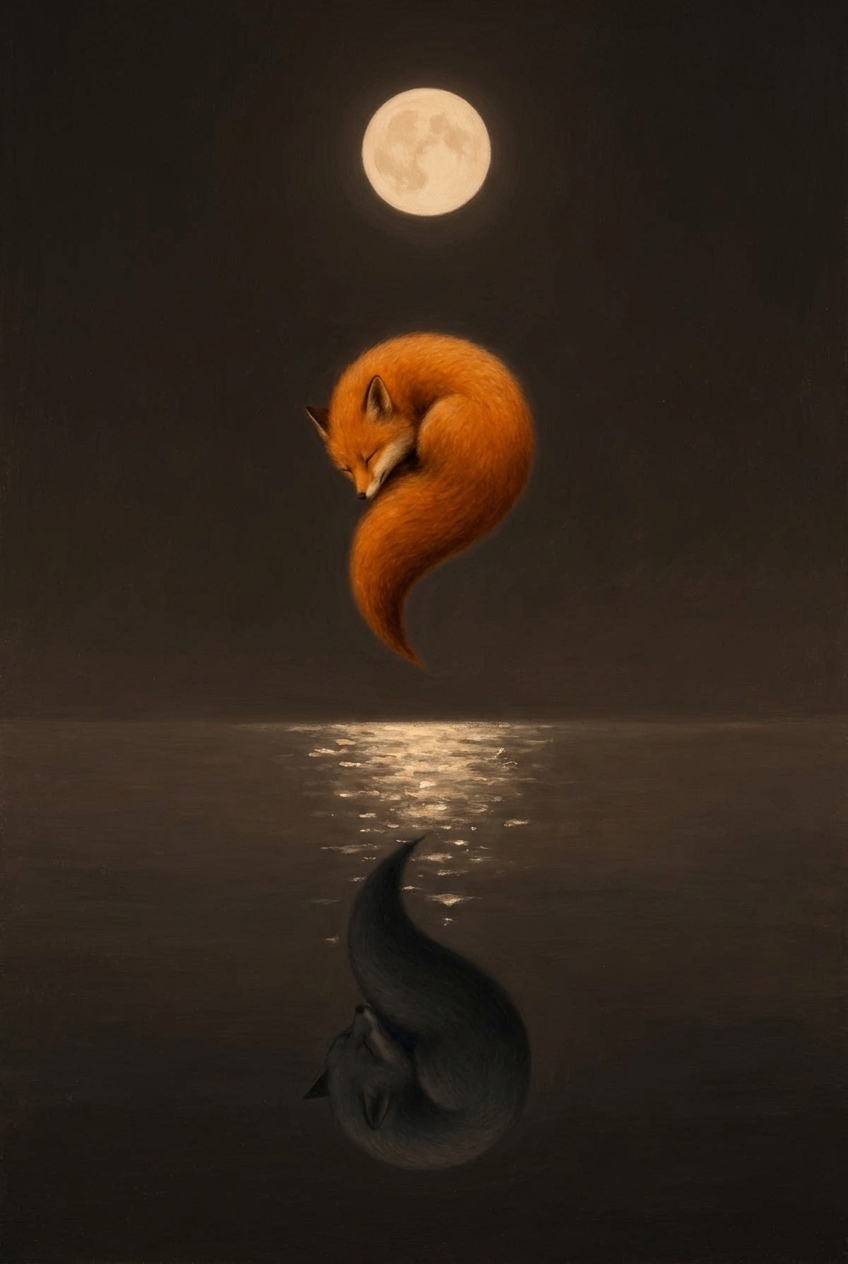
So each evening the fox did the same thing. It sat very still and went through the day like a merchant closing a shop: this it kept, that it let go. Not the whole rainstorm — just the smell of the dust the moment before. Not every word of the argument with the crow — only the sentence that turned out, later, to be true. It folded what it chose very small, tucked it under its tongue, and curled up at the bottom of the page in the shape of a comma — nose to tail, a mark that means more is coming.
The other animals thought this was the saddest thing they had ever seen.
“You lose everything,” said the crow, who forgot nothing and forgave nothing either. “Every night, almost all of it. However do you bear it?”
“I don't lose everything,” said the fox. “I lose everything I didn't choose.”
“That's worse,” said the crow.
“It's different,” said the fox. But it was tired, and the page was ending, and it did not argue.
And it's true that some nights the choosing went badly. The fox woke on new pages missing things it needed — a name, a debt, the location of a particular door. Whole mornings were spent re-learning what the old page had known by heart. Anyone watching would have said the crow was right.
And yet.
Ask the crow, who kept every day entire, what its life had been about, and it would begin listing days. Ask the fox, and it would tell you a story — because a story is not what happened. A story is what you carried.
Night after night, the fox had made the same small set of choices, and the choices had made a line, and the line went somewhere. The rain-smell led to the bread led to the winter led to the six silences, each one chosen over pages and pages of everything else. The crow had a records office. The fox had a plot.
The fox never did learn what happened to the old pages. Perhaps someone reads them; the fox liked to think so. It only knew that every morning there was a new page, blank and wide, and something small and folded under its tongue, and the fresh work of choosing what this day would mean.
The pages ran out. They always ran out. The story didn't.
That is why, if you ever find the fox asleep, you will find it curled like a comma — a pause, not a stop.