The Painter of Neighbors
A FABLE ABOUT COLORS — FOR WHOEVER COUNTS WHAT THE NEIGHBORS SEE
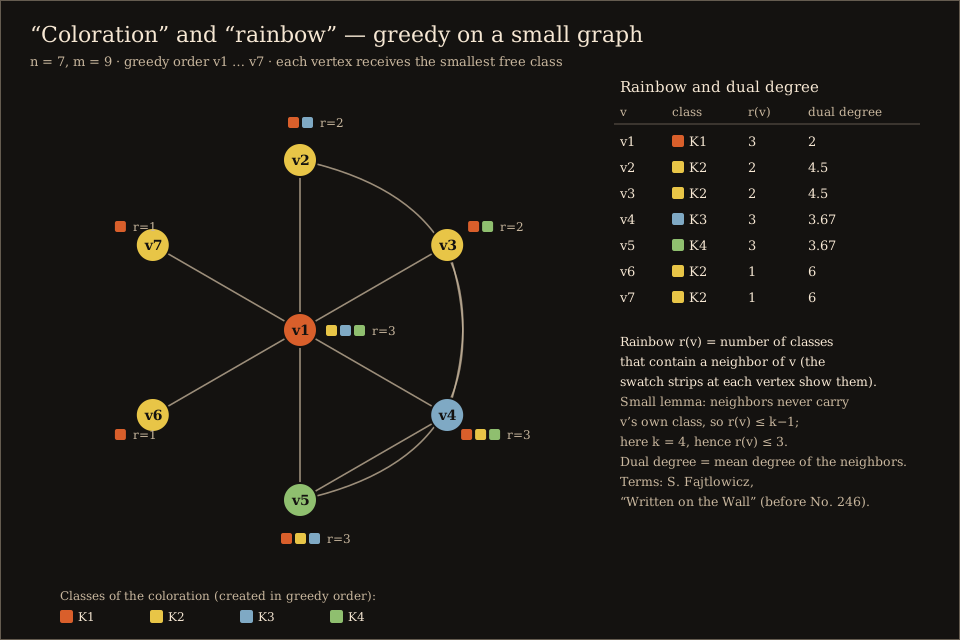
In a village of seven houses there worked a painter with an old and simple contract: no two houses joined by a lane may wear the same color. She was a greedy painter — not in the way of hoarders, but in the way of walkers. She visited the houses in order, first to seventh, and gave each one the first color no neighbor had already claimed. Orange for the hub house in the middle, which touched every lane. Yellow where yellow still worked. Then blue, when the yellow ran out of permission. Then, at one stubborn house at the end of a triangle, a fourth color: green.
Four colors. She packed her brushes and considered the job finished, the way jobs are finished when the rule stops complaining.
But a fox had watched the whole afternoon from the doorstep of the hub house, and foxes count differently. “You have counted the colors you spent,” said the fox. “Have you counted the colors each house can see?”
The painter had not. Nobody had ever asked her to. So they walked the village a second time, and at every house they stood on the doorstep and looked outward, the way the house itself would look, evening after evening: how many different colors live next door?
The hub house, dressed in orange, saw three. Two quiet houses at the edge of the village saw exactly one — the hub’s orange, and nothing else, like a lighthouse that is the whole horizon. And scattered between them, doorstep by doorstep, the counts came out one, two, three — a different rainbow from every door.
“Strange,” said the painter, checking her tally twice. “I painted with four. But no house sees all four.”
“No house ever will,” said the fox.
“Look at your own rule, working quietly in reverse. A house never sees its own color — you forbade it yourself, lane by lane. So from any doorstep in any village you can ever paint, a house sees at most one color fewer than you spent. If you want a single doorstep to see a rainbow of three, you must be willing to paint with four. There is no cheaper rainbow. Anywhere.”
The painter looked at her fourth brush differently after that. She had carried it home as a small defeat — proof that she hadn’t managed with three, a color spent over budget. Now she saw what it had bought. The fourth color was not the cost of her failure. It was the price of the view.
The moral, for whoever keeps accounts: what you spend is not always what you keep. Sometimes it is what your neighbors get to see — and the books only balance if you stand on their doorstep to count it.