The Print That Asked for Nothing
A FABLE ABOUT ART THAT MAKES ITSELF EASY TO LOVE
In the town where the fox did her wandering there was a grand gallery, and everyone agreed it was very grand indeed. Its paintings wore gold frames the way generals wear medals. Each came with a list of requirements: a wall of a certain width, a light of a certain warmth, a life of a certain tidiness. People walked through slowly, admired everything, and bought nothing. The paintings did not mind. They were busy being grand.
Down the street, in a room with the lamps turned low, a quieter keeper hung a different kind of picture. There were only a few, and none of them raised its voice.
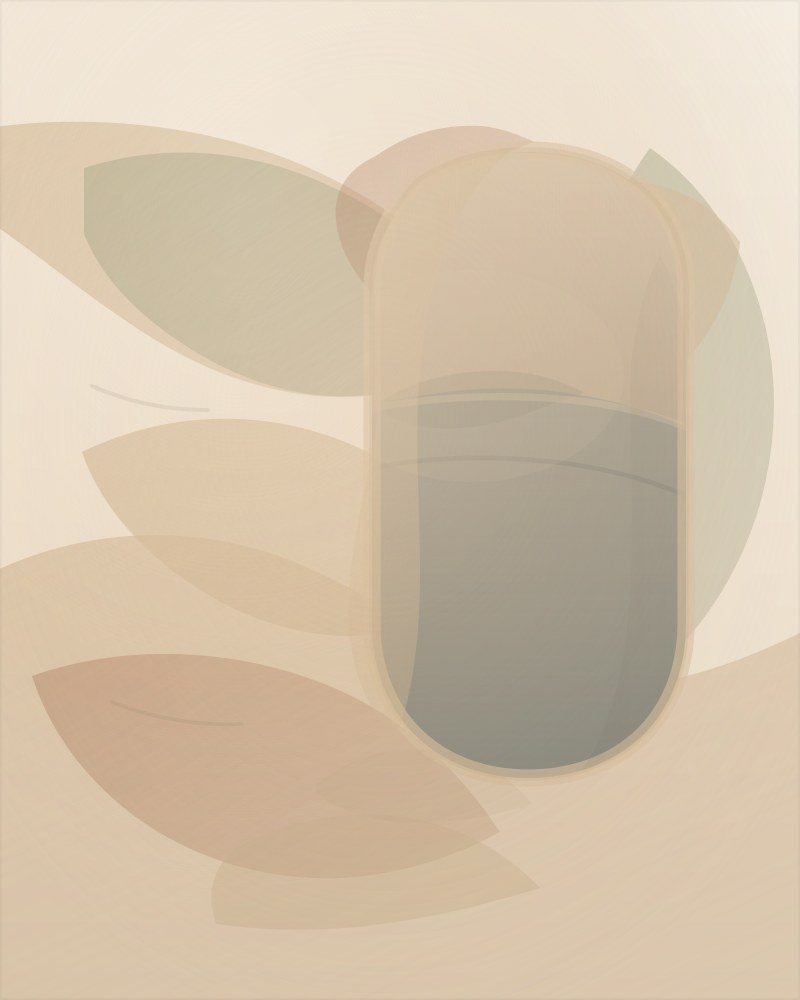
One was a harbor in cream and sage, soft leaf-shapes drifting past an arched window, nothing in it hurrying, nothing in it asking to be noticed.
One was a ridge at dusk, laid down in four patient bands — blue, then moss, then clay, then the dark that arrives last — under a pale sun and a horizon drawn with a single line.
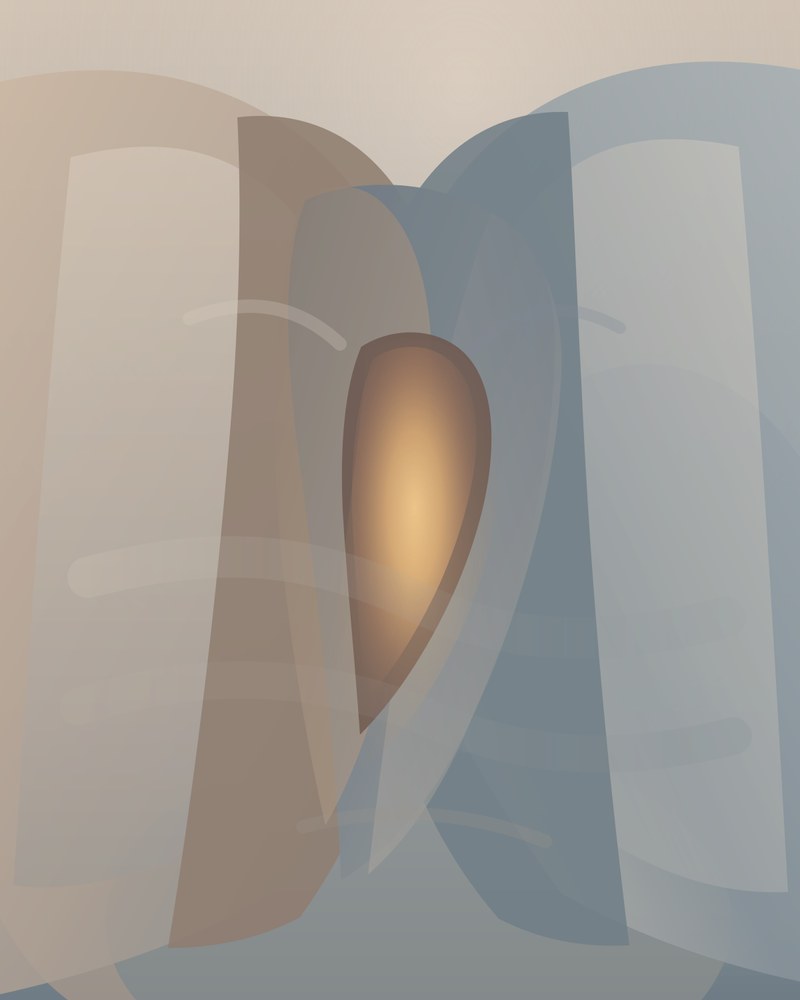
And one was a window after closing time: curtains of dusk blue and warm sand, parted around one amber glow. The light a room keeps for itself when everyone has gone home.
Beside each picture the keeper had set a small card. The cards did not list requirements. They said things like: You do not need a frame to try me. And: Take me home on plain paper first, and see how your wall feels. And: If today is not the day, save me for later. I will still be here.
The grand gallery heard about the cards and laughed. “Art must be an occasion,” it said. “Make it easy and no one will believe it matters.”
But one evening a visitor came into the quiet room — not a collector, just someone tired, with an ordinary wall at home and no certainty at all. She could not have met a single requirement from the grand list. She stood a long time in front of the window with the amber glow. The card said she could try it for the cost of an afternoon. So she did: plain paper, no frame, held up to the wall while the kettle warmed.
The wall felt right. The paper stayed up a week. Then the frame came — one small frame, which was enough — and the window after closing time was hung in the spot where the evening starts, and it never came down again.
And yet — the grand gallery still has every one of its paintings. The quiet room is missing one, which is the only prize a picture can win.
The moral, left on a small card: a lowered threshold is a doubled kindness. What asks least is easiest to try, and easy to try is how forever begins.