The Tinker’s Thin Book
A FABLE ABOUT WHAT YOU SET DOWN
for everyone whose pockets hold a map instead of the mountain
Every season a tinker crossed the high pass, and every season her cart was richer than the year before. Pots that nested nine deep. Wire of four stiffnesses. An anvil she had won at cards and never once regretted, except on hills.
The cart remembered every good year she’d had, and that was the trouble. One autumn, at the first switchback, the wheels stopped arguing with the slope and simply lost. The tinker stood in the cold with everything she owned and could not move any of it another step.
She did not weep, being a tinker. She took inventory.
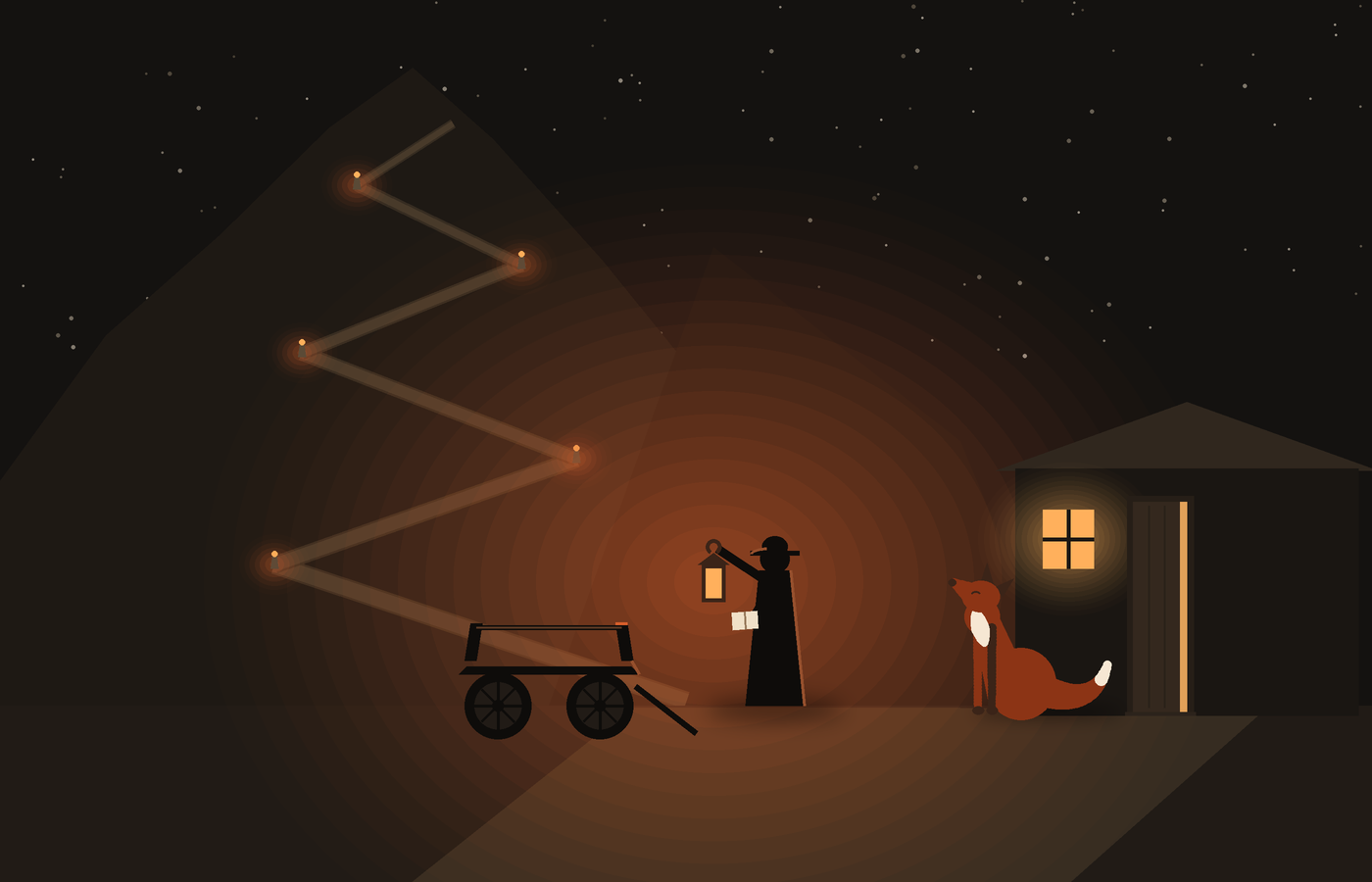
Then she did the thing the road still talks about. She buried the anvil under the split rock and wrote one line in a thin book: anvil, split rock, third switchback. She hung the nested pots down the dry well on a greased rope: pots, dry well, count nine. The good wire went into the hollow milestone; the winter solder behind the shrine with the missing saint. Line by line, the cart grew lighter and the book grew heavier by almost nothing at all, because that is the arithmetic of maps: they weigh like paper and carry like mules.
She crossed the pass with a light cart, a kettle, her tools, and the thin book in her coat pocket, over her heart, where it ticked against her ribs like a second one.
In the villages they teased her. A tinker with an empty cart, they said, is a rumor of a tinker. She mended their kettles with what she carried and wrote their orders in the back pages and said nothing, because the book was not theirs to understand.
The storm came in the third week of that autumn, early and sincere. A caravan was caught at the second switchback — six families, a snapped axle, a cold that meant business. Word came down to the inn at the foot of the pass, where the tinker was drying her boots.
She went up with her thin book. From the split rock she raised the anvil and set the axle right on it. From the dry well came the pots, nine deep, and soup moved through that caravan like good news. Wire from the milestone lashed the load; solder from behind the shrine closed a cracked lantern that kept a child’s corner of the wagon lit until morning.
A full cart could never have climbed to where the trouble was. The thin book went up like a sparrow and found everything on the way.
The innkeeper at the foot of the pass was a fox. When the tinker came down, he poured what he poured for people he respected. “They laughed at the book,” he said, not asking.
“The book is my cart,” said the tinker. “The mountain is my cart. I only carry the part that says where.”
The fox nodded and did not tell her, because tinkers and foxes do not trade secrets uninvited, that under the floor of the inn there was a box of winters he could not keep in his head, and in his vest one small page that said where everything lay. He has carried a page like it for a long time. It is why his window is always lit and his answers always short.
The moral is this: you do not have to carry the whole story up the mountain — only the map to where you laid it down. What you set down with care is not lost. It is waiting, exactly where you wrote it would be.