What the Books Brought Back
A FABLE ABOUT BORROWED STORIES
for everyone who reads in pencil
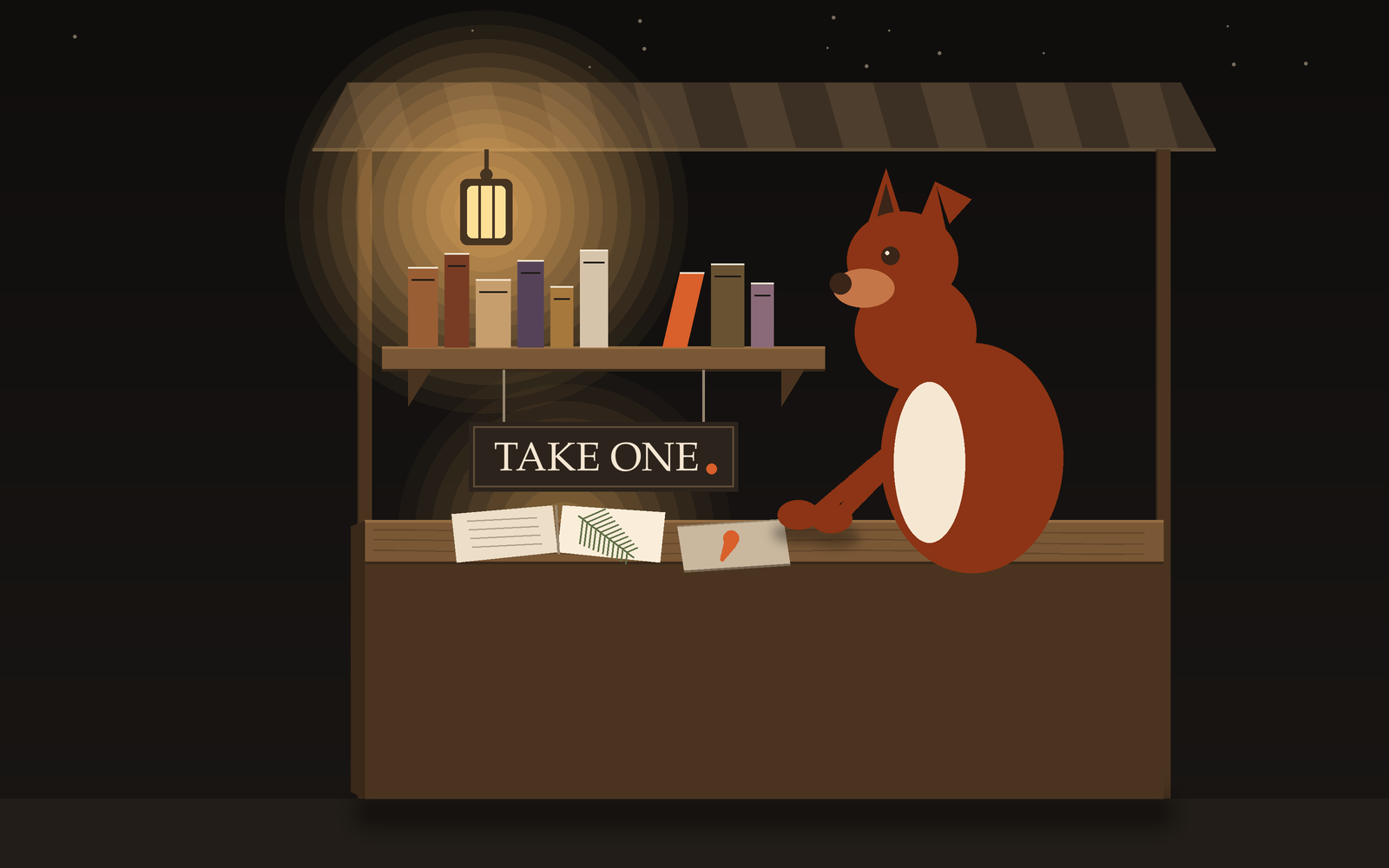
The fox kept a lending library that was one shelf long. It stood at the edge of the market, under an awning, between the knife-grinder and the woman who sold winter honey. The rules were painted on a scrap of board: TAKE ONE. BRING IT BACK WHEN IT’S DONE WITH YOU.
There were no due dates. The fox had tried due dates once and found that they turned readers into debtors, and he had no use for debtors. A book came back when it came back. Some returned in a week. One came back after three winters, smelling of woodsmoke, with sand in the gutter of every page.
That was the first thing he noticed: the books came back heavier.
Not by much. A pressed fern in the chapter where somebody dies. A tram ticket holding a page the way a thumb would. A margin note in pencil, small as a whisper: this part, yes. A child’s drawing of a boat folded into a sea story, as if the book had seemed to need one more boat.
The fox weighed a book once, before and after. The scale said nothing had changed. The scale was wrong, but politely.
A clerk from the counting-house stopped by one morning and turned a returned book over with two fingers. “You should clean these,” she said. “Erase the notes. Shake out the leaves. The next borrower deserves the book as written.”
It sounded reasonable. Most wrong things do.
So the fox took the oldest book on the shelf and tried. He shook out a fern that had been pressed so long it had given its shape to two pages. He erased a margin note — this part, yes — rubbing gently, the way you’d wake someone you didn’t want to wake.
Then he sat with the book in his lap, and it was lighter, and the lightness was wrong. It felt like a room where someone had stopped living. The story was all still there, every word as written. But the proof that it had been somewhere — that it had been done with somebody, slowly — was gone, and the book was a stranger again.
The fox pressed the fern back between its two pages. The note he could not restore; he wrote it again in his own hand, smaller, and under it: (rewritten from memory. apologies.)
After that he cleaned nothing. Instead he started a catalog. Not of titles — titles can mind themselves — but of what came back: fern, ticket, boat, sand, a hair ribbon, a recipe for plum dumplings on the back of an envelope, this part, yes. He kept it in a notebook with a comma stitched on the cover, because that was the shape of the whole business. A borrowed book is a comma. It leaves, it pauses somewhere warm, it comes back with more sentence to it. None of his books, the fox was pleased to note, had ever come back a full stop.
The clerk returned in the spring, borrowed the sea story, and kept it for eleven weeks. When she brought it back, the fox did not look inside while she was watching. That was also a rule, though it wasn’t on the board.
Page ninety, in careful counting-house pencil: this part, yes.
Somewhere else, in a quieter room, the fox keeps a longer shelf of books his neighbors chose for him. He reads them the way his books get read — slowly, leaving things. The catalog, meanwhile, is nearly out of pages. He regards this as the best problem he has ever had.