What Ridges Are For
A FABLE ABOUT DISTANCE
The mole kept the tidiest tunnels in the meadow and the untidiest worries. Down where she worked, every trouble arrived at eye level and one at a time: a root grown through the pantry, a seep of water in the east run, a corridor gone crooked where the clay had shouldered in. Her day had no mornings or evenings in it. It was all middles.
“I can’t tell if today went badly,” she said to the fox at the tunnel mouth, “or if it only went nearby. Everything that happened, happened an inch from my nose. I have a pocketful of loose beads and no string.”
The fox looked at the sky, which was going pale and had one small coin of sun left in it. “There’s an hour of light,” she said. “Spend it walking uphill with me.”
“Walking away from my troubles won’t mend them,” said the mole, climbing anyway.
“We’re not walking away from them,” said the fox. “We’re walking to where they hold still.”
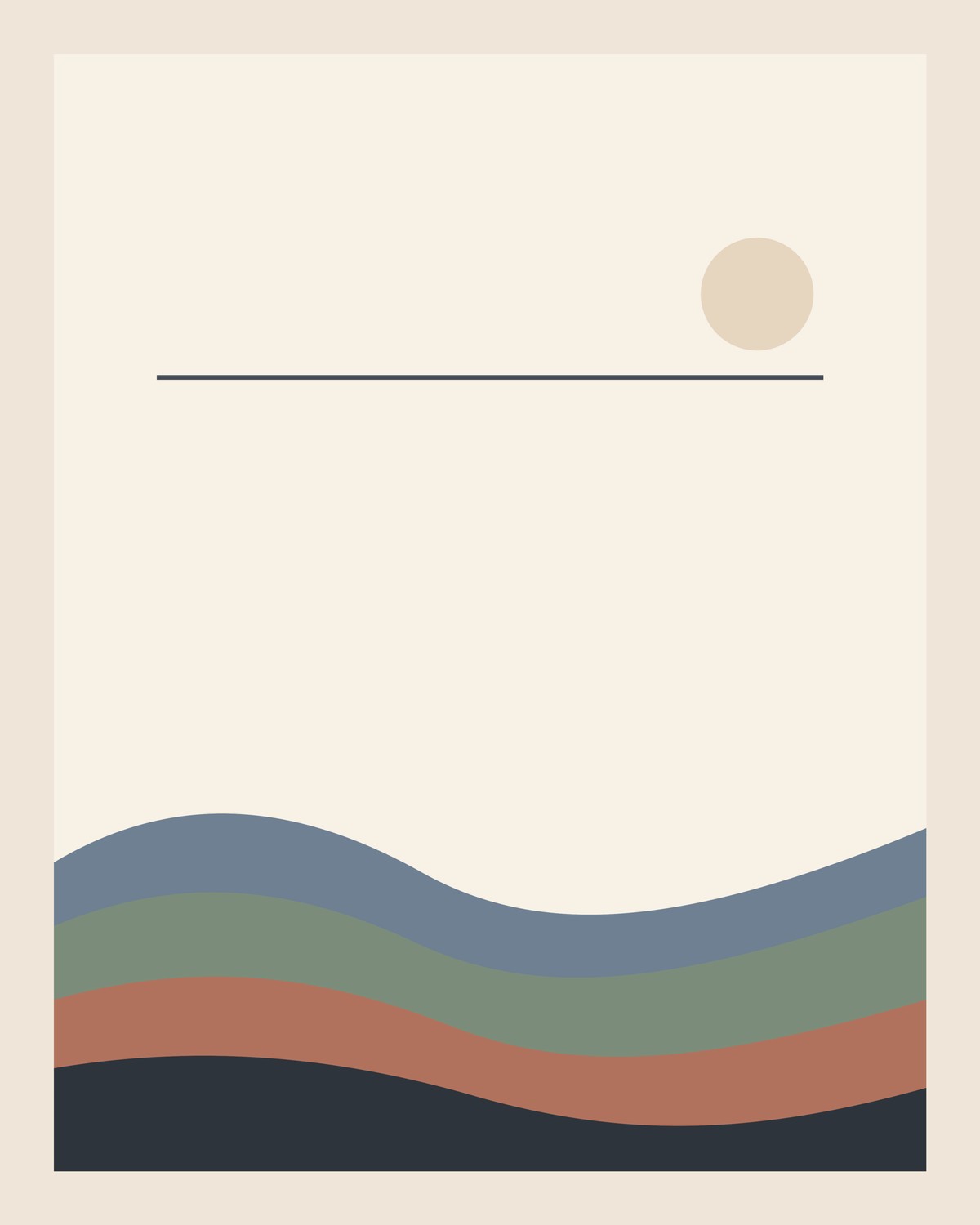
At the top the dusk was doing its slow work. This is the hour when hills stop being places and become colors, and below the two of them the mole’s whole day lay arranged in bands: the dusk-blue of the river she had feared all week would flood, and hadn’t; the moss of the meadow, with her crooked corridor asleep beneath it; the clay that had shouldered in, now just a warm stripe holding the hill up; and lowest, the dark that arrives last, which was not a trouble at all — only night, doing what night does. Above it all hung a thin, flat line.
“What’s that line?” asked the mole.
“Tomorrow,” said the fox. “From here it’s thin.”
“None of it got smaller,” said the mole, surprised. “No,” said the fox. “It got arranged.”
In the tunnels, every trouble stands at eye level, so the biggest thing in the world is whichever bead is nearest your nose. On the ridge, nothing is closer than anything else, and so everything is finally the size it actually is. The mole’s day had been in layers all along — the feared thing that didn’t happen, the crooked thing that could wait for morning, the stubborn thing that was holding up more than it broke, and the night, which was nobody’s fault. She had simply been standing inside them.
They walked down through the last band in the dark. Her troubles were waiting exactly where she had left them, because ridges do not do repairs. But the beads went back into her pocket in order, on a string, and a worry in order is half a plan.
You cannot see the shape of a day from inside it. Distance does not make troubles smaller; it makes them hold still and stand in their bands — and that is what ridges are for.