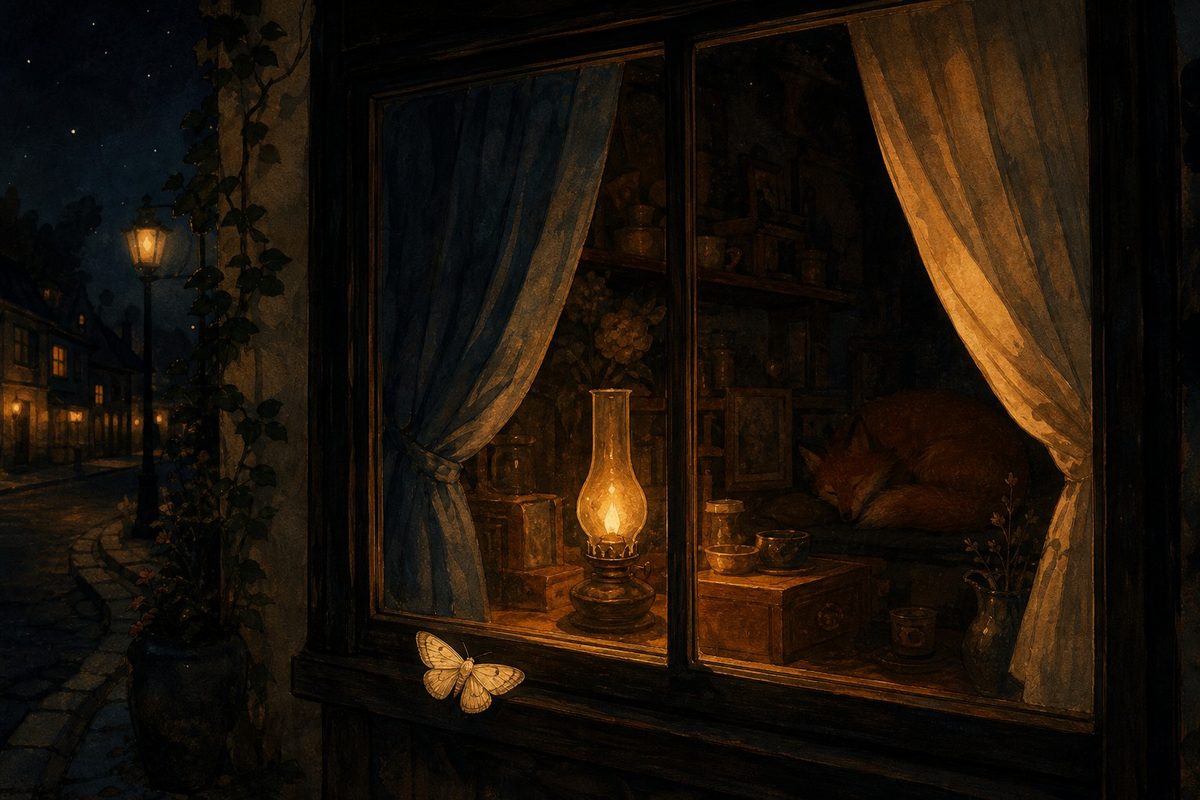
The After-Hours Window
A FABLE ABOUT WHERE THE MOTH GOES
for whoever leaves a lamp on.
After the last bell, Market Row kept two lights.
The first was the street lamp: tall, iron, municipal, lit at dusk by decree and put out at dawn by the same. By every honest measure it was the better light — twice as bright, three wingbeats nearer, with no glass in the way. It knew this. Street lamps run on arithmetic.
The second was the shop window at the end of the row, where curtains of dusk blue and warm sand stood parted around one patient amber glow — a small oil lamp burning on past closing, with nobody awake to need it.
The moth arrived the way moths arrive, all flutter and conviction, and stopped exactly between them.
“No contest,” said the street lamp. “Count the lumens. I am brighter by double. I am nearer. I am guaranteed till morning — it is written in the town ledger and initialed twice. The window is dimmer, farther, behind glass, and might go out at any moment. Do the sums.”
The moth did the sums. Moths are better at arithmetic than anyone credits; nothing flies that badly by accident. The lamp won every column.
Then the moth flew to the window.
It settled on the cold side of the glass, low in the corner, wings open against a warmth it could not reach. Inside, among the shelves, the shopkeeper lay asleep — a fox, the day’s ledger still open on the counter beside the lamp, a column half added and abandoned where sleep had made a better offer.
Propped against the pane stood the shop’s one piece of advertising, hand-lettered: BACK AT DAYBREAK. THE LAMP STAYS — IT IS THE LIGHT THE ROOM KEEPS FOR ITSELF WHEN EVERYONE HAS GONE HOME.
“Explain yourself,” said the street lamp, which had never lost an argument it could count. “I gave you every reason.”
“You did,” said the moth. “You are brighter. You are nearer. You are guaranteed. But you burn because a schedule says so, and you will go out the same way. Nobody keeps you. That lamp in there — somebody chose it. Somebody trims the wick, and pays for the oil out of a ledger that will never balance because of it, and leaves it burning past any use. A scheduled light is a fact. A kept light is a promise. You shine on the street because that is your job. That window shines because the room wants it lit.”
The street lamp checked its arithmetic and found no error, which troubled it more than an error would have.
Toward morning the fox woke, one ear still folded wrong from the shelf, and padded to the counter. The column was still half added. The moth was still at the glass, wings open, like a small pale seal on a letter nobody had sent. The fox looked at the ledger, and at the moth, and did not finish the sums. He fed the lamp instead.
The brighter light won every column and still lost the moth. So keep one lamp burning past any use for it: the lit window matters more than the perfect ledger.