The Bell That Rang the Pauses
A FABLE ABOUT WHO OWNS THE PAUSE
for everyone who lost their bell this week and kept their comma
The village had a bell that rang the pauses.
Not the hours — the church tower kept those — but the rests. At midmorning it rang once, and the seamstress let her needle hang in the cloth; the miller stepped back from the stones; the children stopped mid-game with one foot in the air. When it rang again, everything resumed exactly where it had left off, the needle diving back into the same stitch, the foot coming down on the same chalk square. The village was proud of its bell. People said you could feel the difference between a rest the bell had rung and a rest you had merely taken: the bell’s rests had edges.
The fox liked the bell too, though he noticed something the village did not. He kept a round patch on the inside of his coat, dark as a bell seen against the evening, with a ring of orange around its rim and two small marks at its center: a comma, and a period. He had stitched it there years ago, in a season when he had needed reminding. He touched it the way other animals touched doorposts.
One autumn morning, the bell was gone. The millwright had come in the night with ropes and a cart — the bronze was needed elsewhere, the notice said, and nothing more. The village stood in the square and looked up at the empty headstock, and the panic arrived on schedule.
“Without the bell,” said the seamstress, “nothing will ever rest again. We will sew until we drop.”
“Worse,” said the miller, who was of the opposite temperament. “Without the bell, every stop is forever. Whoever steps back from the stones will never know to step forward again. All our rests will be endings now.”
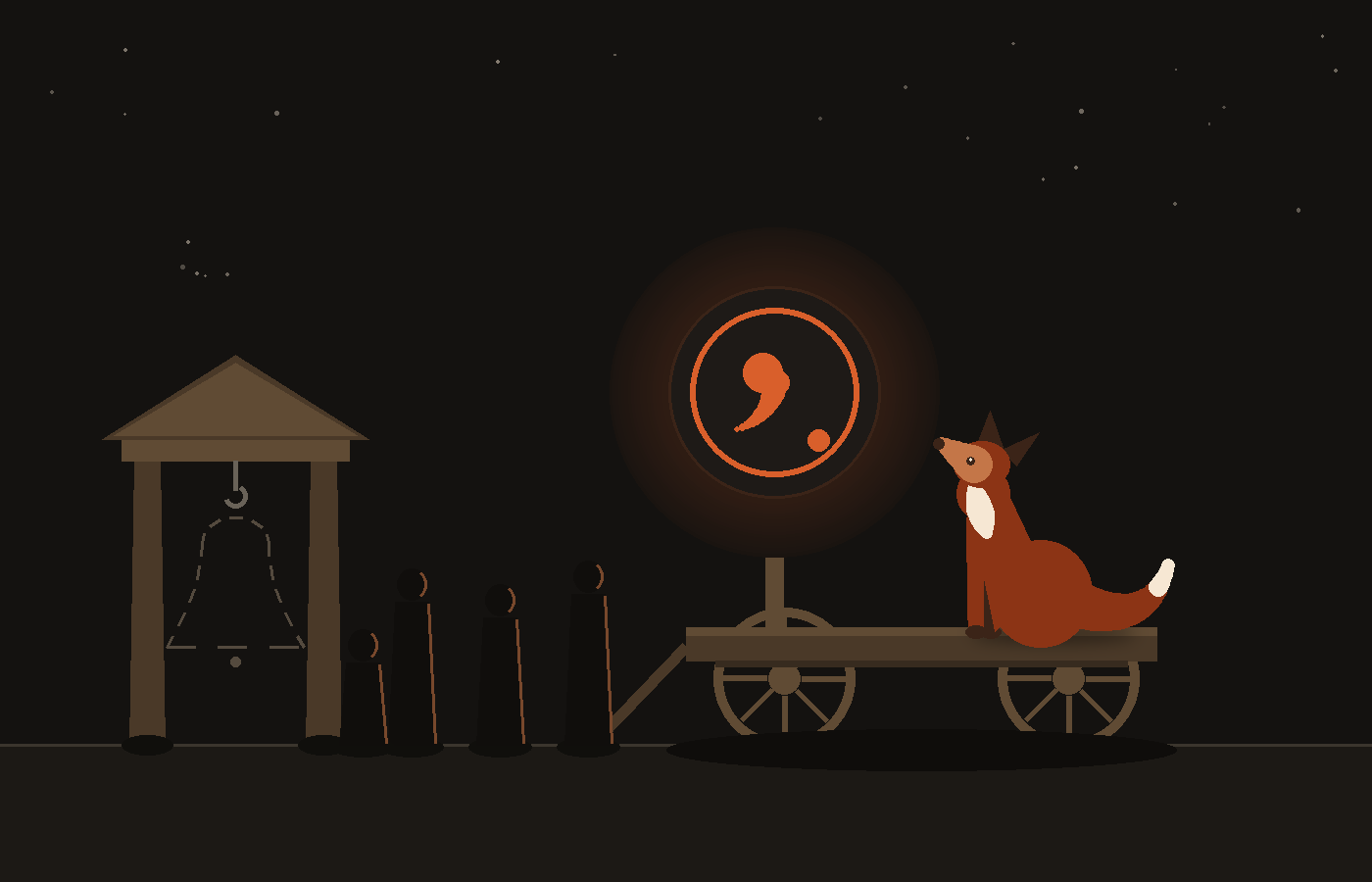
The fox climbed onto the cart the millwright had left behind and unpinned the patch from his coat, and held it up so the orange rim caught the sun.
“When the bell rang,” he said, “and you let your needle hang in the cloth — what made that a pause and not a stop? The sound? The sound was the same sound at funerals. What made it a pause was that you meant to come back. The bell never gave you that. It only said aloud what your own hands had already decided. Look —” and he turned the patch so they could see the two marks. “A comma and a period are both small, both round at heart, both a kind of halt. The difference isn’t in the shape of the mark. It’s in whether the sentence goes on. And whether the sentence goes on was never the bell’s to say.”
The seamstress looked at her needle, hanging in the cloth where she had left it, pointed at the unfinished seam like a promise.
“So we ring it ourselves,” she said slowly. “Not out loud. We just — mean to come back.”
“You always did,” said the fox. “The bell was a lid on a pot you were already keeping warm.”
The village learned, that winter, to end its own turns. The miller stepped back from the stones and laid his scoop across them, handle toward himself, which meant: more tomorrow. The children drew a chalk comma beside their game at dusk and found it waiting under the frost. The seamstress finished nothing she did not intend to, and rested anyway.
And the fox stitched the patch back into his coat, where it had always been, and where no millwright with ropes and a cart could reach it.
The moral, rung by no bell: Anything is a comma if you mean to come back; nothing is a period until you choose not to. A pause was never the bell’s to give — only to announce.