The Clock That Kept Two Times
A FABLE ABOUT WHAT A DAY COSTS
for everyone who was told the meeting was only an hour
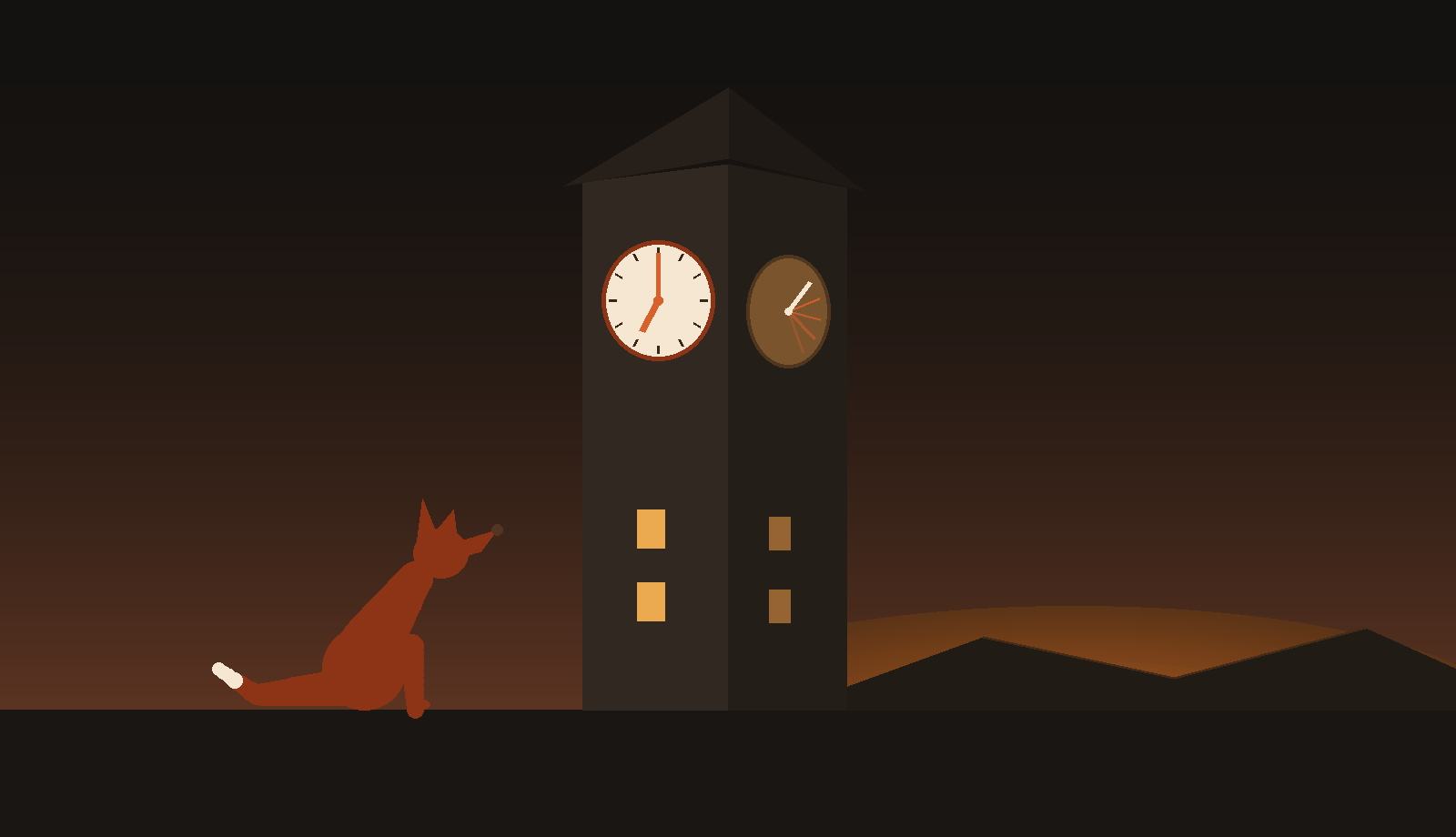
In a town the fox once walked through, the clock tower had two faces, and they did not agree.
The face that looked over the square kept proper time. It was polished weekly, checked against the stars, and trusted by everyone with a train to catch. The face that looked toward the hills kept another time entirely. On market days it raced; three hours of haggling went past in what it swore was nine. On slow gray afternoons it barely crawled. And all night, every night, it stood perfectly still — not stopped, the tower insisted, just not spending.
The town had summoned clockmakers, naturally. They came with fine brushes and finer opinions, opened the hill face, and found nothing to fix. The gears were honest. The error, if it was one, was not in the works.
So the town argued instead. Travelers took sides at the inn. “The square face is true,” said a merchant, “because two towns can agree on it.” “The hill face is true,” said a mason, rubbing his shoulder, “because my arms have never once believed the square.”
The fox arrived on a market day and left on a quiet one, which is the only honest way to study a clock. He watched the square face move like water and the hill face move like weather. He noticed what the clockmakers, looking inside, had missed by not looking out: the hill face did not count the sun. It counted the day. It moved when the square was crowded and the questions came quickly; it sat nearly still while the baker leaned in her doorway, waiting for bread she could not hurry. It did not measure how long things took. It measured how much they asked.
On the fox’s last evening, the innkeeper caught him at the door. “You’ve watched both. Which face is true?”
“Both,” said the fox, “and for different errands. One tells you when to arrive. The other tells you what it cost.”
The innkeeper frowned at the tower, where the square face said seven and the hill face said something private. “And if they disagree?”
“They will always disagree,” said the fox. “Trust the square face with your appointments. Trust the hill face with your apologies. When someone comes home at six having lived until eleven, the kind question is not ‘where were you?’ The kind question is ‘which clock?’”
He put his nose into the evening and went on. Behind him the town kept both faces wound — one for the trains, one for the tired — and the clockmakers, to their credit, stopped trying to make them match.
The moral, if a fable with two faces can keep just one: A day has a length and a weight, and only one of them fits on a schedule.