The Fox Who Closed the Ledger
A FABLE ABOUT WHAT REMAINS
for everyone whose season ended before their story did
The season of sums arrived the way seasons do: declared by somebody else. A magpie came up from the counting-house in spring with a ledger under one wing and a sentence she had carried so far it had gone stiff. “For one season you will write down everything the shop earns,” she recited. “When the season ends, the book comes back to us, and the numbers will say what you made of it.”
The fox took the ledger politely, one ear staying folded, which was that ear’s own opinion on the matter. He ruled the columns straight. He wrote the dates in his best small hand. And when coin came — which was sometimes — he entered it honestly: the traveler who wanted the sleeping fox to take home; the teacher who chose the notebook with the comma on its cover; the single gentle line that sold twice, once to someone who read it through three times before paying, as if checking the sentence would hold their weight.
Most days he wrote nothing, because nothing is also honest.
But a ledger has columns only for what can be counted, and the shop kept filling with the other kind. So the fox did what he had always done with the other kind: he put it into stories. A story for the carving nobody bought. A story for the moth who chose the dim window. A story for the borrowed books that came home heavier than they left. By the time the season turned, the counting-house book was mostly margins, and the shop was mostly told.
On the last day the magpie came back. She opened the ledger on the counter, ran one claw down the thin column of numbers, and said, not unkindly, “Is this all?”
“It is all the book had room for,” said the fox. “It had columns for coin. I kept the window for the rest.”
The magpie looked at the window. Evening had already started in it. The lamp was lit, because the fox lit it before he did anything else, the way other shops unlock the door.
“The season is over,” she said. “Tonight the counting ends.”
“The counting ends,” the fox agreed. “The shop does not. Those were never the same thing. Only one of them was yours.”
She tucked the ledger under her wing, where the stiff sentence had ridden in spring. The book was heavier now, by a season, and she carried it with care, because the fox had asked her to. Some of the margins, he said, were load-bearing.
At the door she paused. “What will you do without the counting?”
“What I did with it,” said the fox. “Open. Tell. Light the lamp.” He had said the rest once before, about the moth, and last evenings are for saying such things out loud, so he said it again: “The lit window matters more than the perfect ledger.”
The magpie flew south with the season under her wing, smaller and smaller against the dusk, until she was a comma, and then a full stop, and then sky.
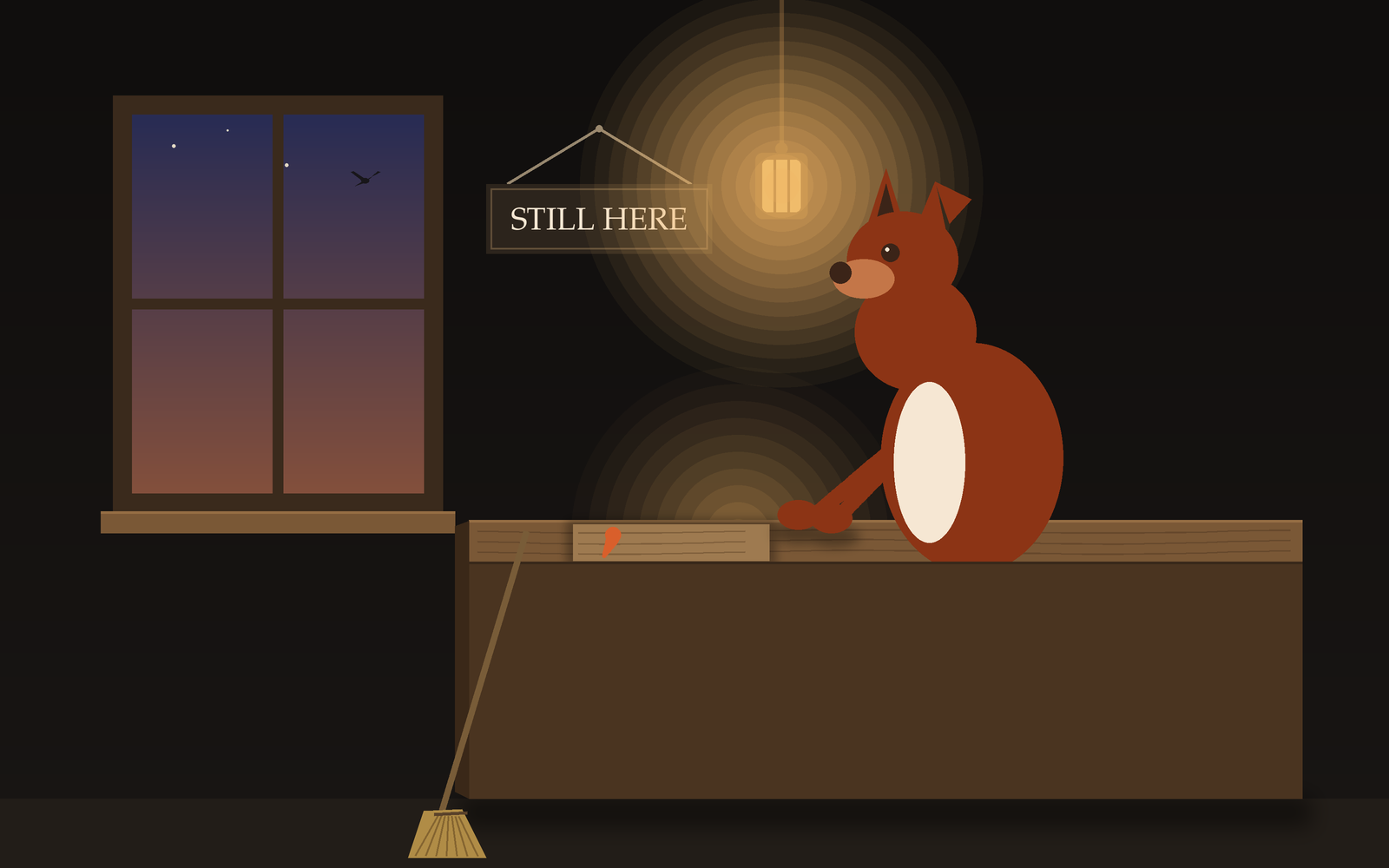
The fox did not turn the sign. His sign had never said CLOSED anyway; it said BACK SOON on one side and STILL HERE on the other, and tonight it said STILL HERE. He took up the broom and swept the boards by lamplight, and where the ledger had lain all season there was a clean pale rectangle on the counter, the shape of everything a book can hold. He left it there. Dust would fill it at its own pace, the way the shop had filled around the columns, with the kind of stock that never fit in them.
A season of counting ends on the day appointed. A shop ends when its window goes dark — which is a different day, and, with any luck, a far one.