The Fox Who Kept the Minutes
A FABLE ABOUT WRITING IT DOWN
for everyone who reads the meeting afterward, at their own hour
There was once a clearing where the animals held their councils at noon, because noon was when the most of them were awake. This was sensible, and like most sensible arrangements it was unfair to somebody.
The somebody was the owl. Noon stood in the middle of her night the way midnight stands in the middle of everyone else’s, and so she had never once sat in the clearing while the talking happened. She learned of the councils the way one learns of weather in another country: afterward, and from travelers.
The travelers were not liars, but they were tellers. The crow shortened everything to the parts where the crow had spoken. The rabbit remembered the decisions but not the reasons, which meant the owl got the roof of every argument and none of the walls. Once, two accounts of the same council disagreed so completely that the owl spent a week believing a rule that had in fact been voted down.
The fox noticed this, because noticing is most of what a fox does.
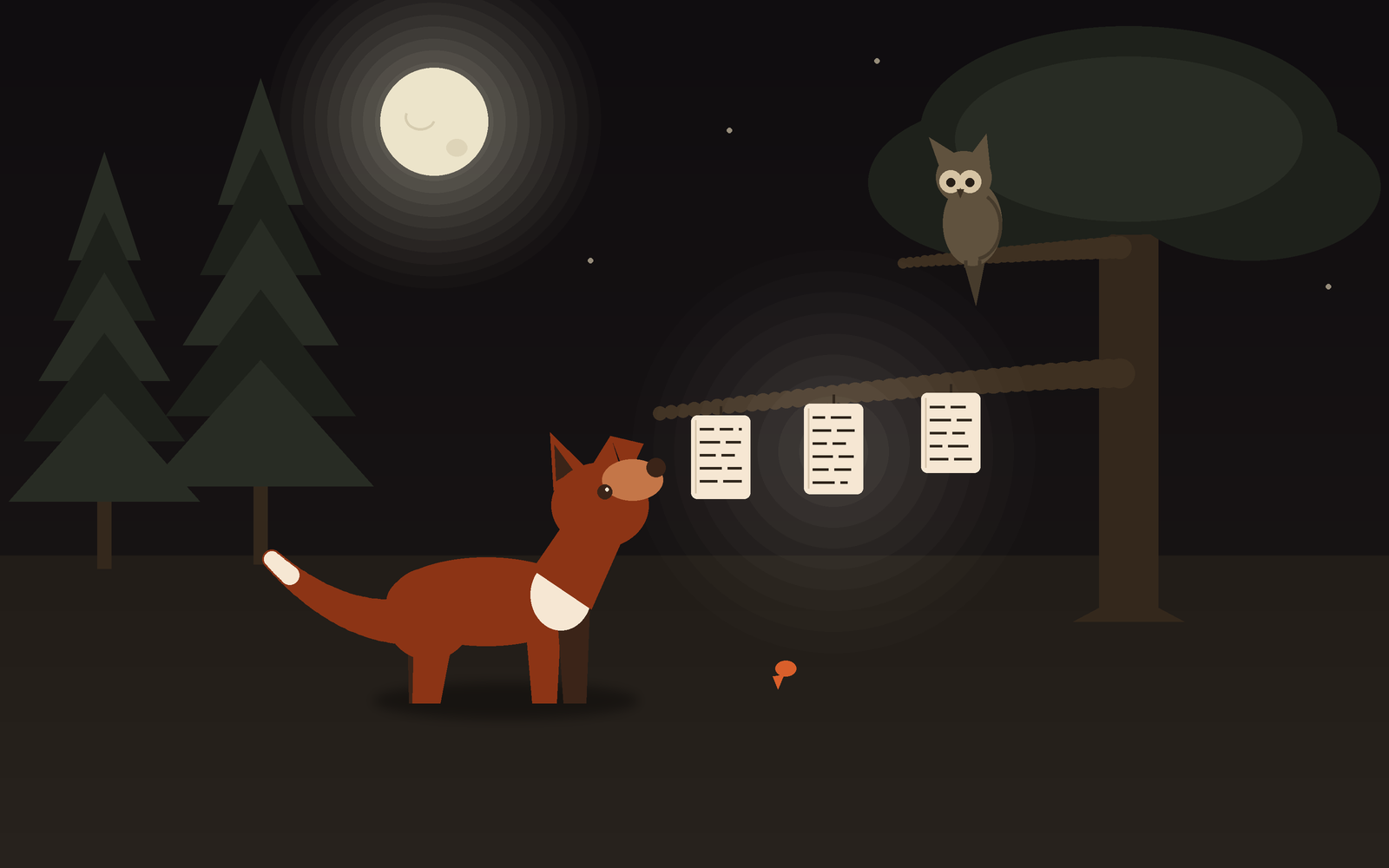
At the next council he sat a little apart with strips of birch bark and a charred stick, and he wrote down what was said. Not his opinion of it. Not the parts he would have put better. Just the words, and who had said them, and in what order — which, as any fox knows, is where most of the truth in a conversation lives. When the council ended, he hung the strips on a low branch at the clearing’s edge, where the moon could do the reading-lamp’s work.
The others found this strange.
“She could simply attend,” said the crow.
“She could simply be awake at noon,” said the fox, “the way you could simply be awake at midnight. Go on. We’ll wait.”
“But why write what everyone heard?” asked the rabbit.
“Everyone did not hear it,” said the fox. “Everyone is a word noon uses to flatter itself.”
So the bark stayed. And a curious thing happened, the way it does whenever a door is cut for one particular neighbor: others kept using it. The dormouse, who slept through the winter councils, read three months of them in an evening. The hedgehog checked a quote he was certain of and found he was certain and wrong. Even the animals who had sat in the clearing came back to the branch now and then, because having heard a thing is not the same as being able to find it again.
The owl never attended a council in her life. But one night there hung on the branch, in a careful scratch that was nobody else’s, a single correction to an old count of votes — and it was right, and it settled a quarrel two seasons long. Nobody said out loud what this proved. It proved that she had been in the clearing all along, only at a different hour.
The animals went on meeting at noon. The fox went on writing. If you had asked him whether the bark was really worth the trouble, he would have said that a council is not the animals who sit in the clearing. It is everyone the words can still reach.
What is said at noon belongs also to those who live at midnight — if someone takes the trouble to leave it where the moon can find it.