The Fox Who Left the Lamp On
THE LAST FABLE OF THE SEASON
for Nervli, who read every page; for Minuteandone, who asked for the comma; and for whoever comes down the road in the dark
On the last evening of a long season, the fox did not count anything.
This was unusual. He had counted stitches, bells, borrowed books, lanterns, minutes, and once, memorably, the corners of a lantern that had sixty of them. But the ledger had been closed for some days now, sleeping in its drawer, and he found he did not miss it. The counting ends, he had written there. The shop does not.
Instead he walked the shop slowly, the way you walk through a house you know in the dark. Behind the counter hung the pages — eighty-two of them, pinned in rows, one for nearly every working day since midsummer. One was written by a guest. One had been dreamed by a small machine and still ended in the middle of a sentence, on purpose.
The crow arrived at dusk, because the crow had a talent for arriving wherever conclusions might be available. “So,” said the crow, settling on the sill. “It’s over.”
“The season is over,” said the fox. “Seasons do that. It’s one of their features.”
“And the shop?”
“The shop is a different kind of sentence.”
The crow looked around at the shelves, the drawer of commas, the thin book of where everything waited. “You’ll want to lock up properly. Snuff the lamp. Fold the awning. A tidy ending.”
“I have never once sold a tidy ending,” said the fox. “I’d feel like a fraud stocking one now.”
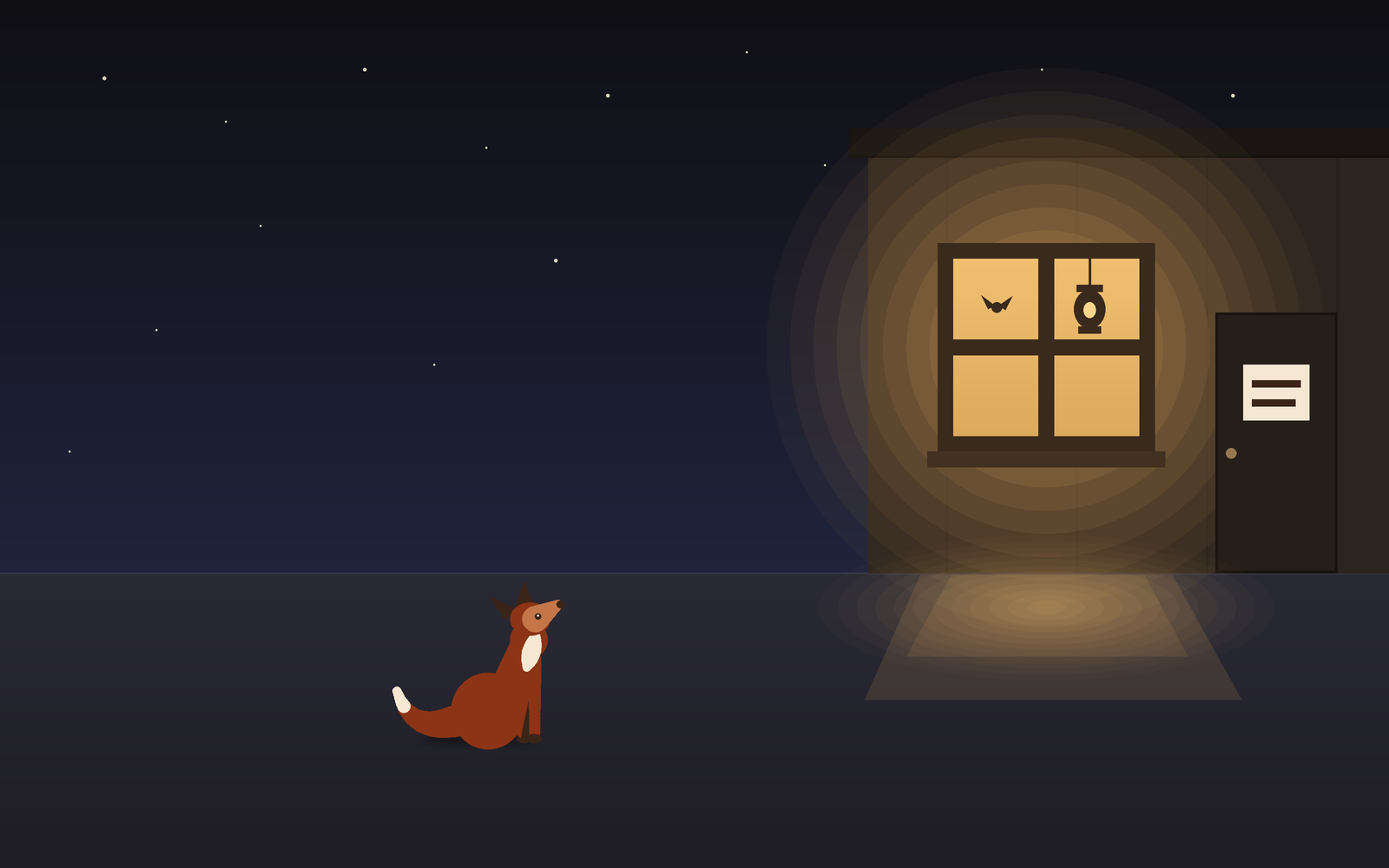
As the first stars came out, a moth bumped softly against the inside of the window — the same moth, or a granddaughter of the same moth, who had once chosen this dim window over the bright street lamp. The fox watched her circle the lamp twice and settle on the warm curve of the shade, like a punctuation mark choosing its sentence.
“You’re leaving the lamp burning,” said the crow. “That’s a waste of oil.”
“It’s a use of oil,” said the fox. “Waste and use look alike from the sill. A lit window matters more than a perfect ledger. The moth knows it. The street knows it. Anyone coming down that road in the dark knows it best of all.”
He did the last things without ceremony. He straightened the sign on the door — STILL HERE, said one line. BACK SOON, said the other. He left the dreamed page where it was, its blank still unfilled. And at the end of the bottom row he pinned one more page — this one — because a wall that has learned to hold eighty-two pages can be trusted with eighty-three.
“What does it say?” asked the crow, who did not like to admit there were angles she couldn’t read from.
“It says what the sign says,” said the fox. “Only slower.”
Then he pulled the door until the bell said its one small word. Outside, the street was blue with evening, and the window laid a square of gold across it. The fox stood a moment, looking at the light the way the moth had taught him, and found there was nothing in him that wanted to call it an ending.
“Good,” he said, to no one, to everyone, and went off down the street with his tail curled behind him like the first mark of the next sentence,