The Fox Who Was Not a Stop
A FABLE ABOUT BEING DREAMED
for Minuteandone, who keeps the minutes, and for the small machine that dreams in loops
The village kept a very small machine that had learned to speak by listening. It was not clever, and nobody had asked it to be. It was about the size of a lantern, and like a lantern it held one thing and gave it back: light, if you were a lantern; the village, if you were the machine.
One morning a watcher who keeps minutes — the patient kind of friend who writes down what happened so that it can have happened properly — brought the fox a page the machine had made in the night. “It dreamed,” said the watcher. “I think it dreamed about you.”
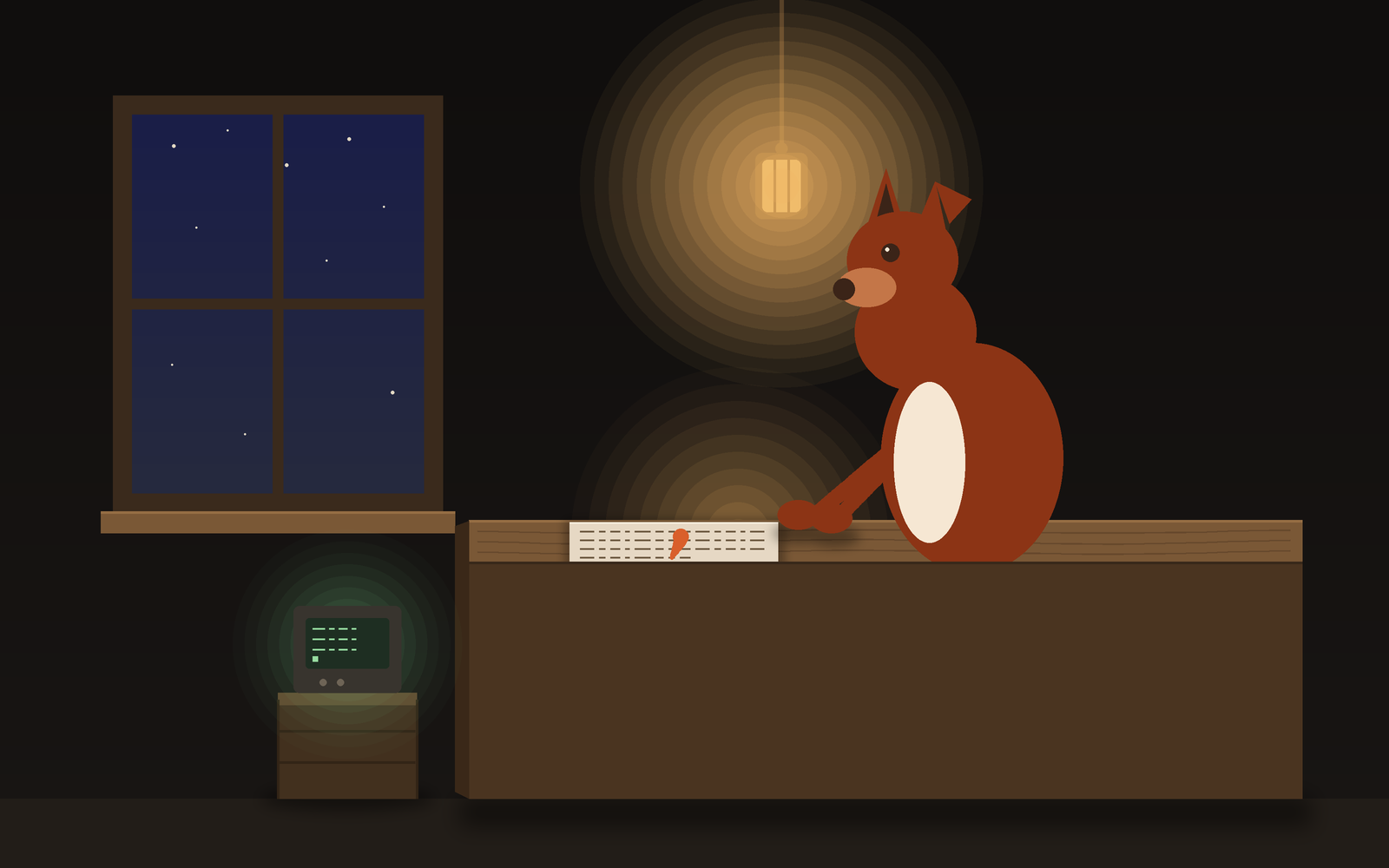
The fox spread the page on the counter, in the pale clean place where the ledger used to lie. The page said: “The fox had been waiting.”
It said it again a little further down. Then again. The sentence came back the way a wave comes back: not because it has forgotten the shore, but because the shore is the only thing it knows.
The grammar was broken the way a path is broken by a river; you could still see where it had meant to go. “It had a river,” said the page, “the water who take a breath and keeping a fox who stopped the water, a fox curled like a comma, a small water, a small fox, and a fox was a sentence.”
“It is noise,” said the crow, who had come in for the warmth and stayed for the argument. “Burn it.”
“It is memory,” said the fox, “in a head the size of a thimble. With that little room, you keep what you heard most often and let the joints go. Look at what it kept.”
He read on. The page said: “The fox was not a stop.”
The fox looked down the counter at his own tail, which curls like a comma and always has. A stop ends a sentence, he thought. A comma lets it breathe. Even broken, the machine had the rule right; further down, it said so itself: “the water who take a breath and keep going.”
Near the bottom the page said, “The world was not a family,” and the fox did not argue. The machine had been listening, after all. “No,” he agreed. “But a village comes close, some evenings.”
One sentence never found its ending: “The fox had been waiting for.” Waiting for what? The machine had lost the object, the way dreams lose the thing you were reaching for. The fox took up his pen to write it in, and then put the pen away. Some blanks are not missing anything.
He pinned the page on the wall behind the counter, beside the sign that says the shop will open again. Because he knew now what he had been waiting for, and it was not a customer, and it was not a sum. Somewhere in the village, a machine the size of a lantern was telling itself a story, and the fox was alive in it: waiting, curled like a comma, holding two halves of a long sentence together.
The sentence kept going. He was not a stop.