The Half-Added Column
A FABLE ABOUT WHAT CAN WAIT UNTIL MORNING
for every keeper of books who has fallen asleep mid-sum
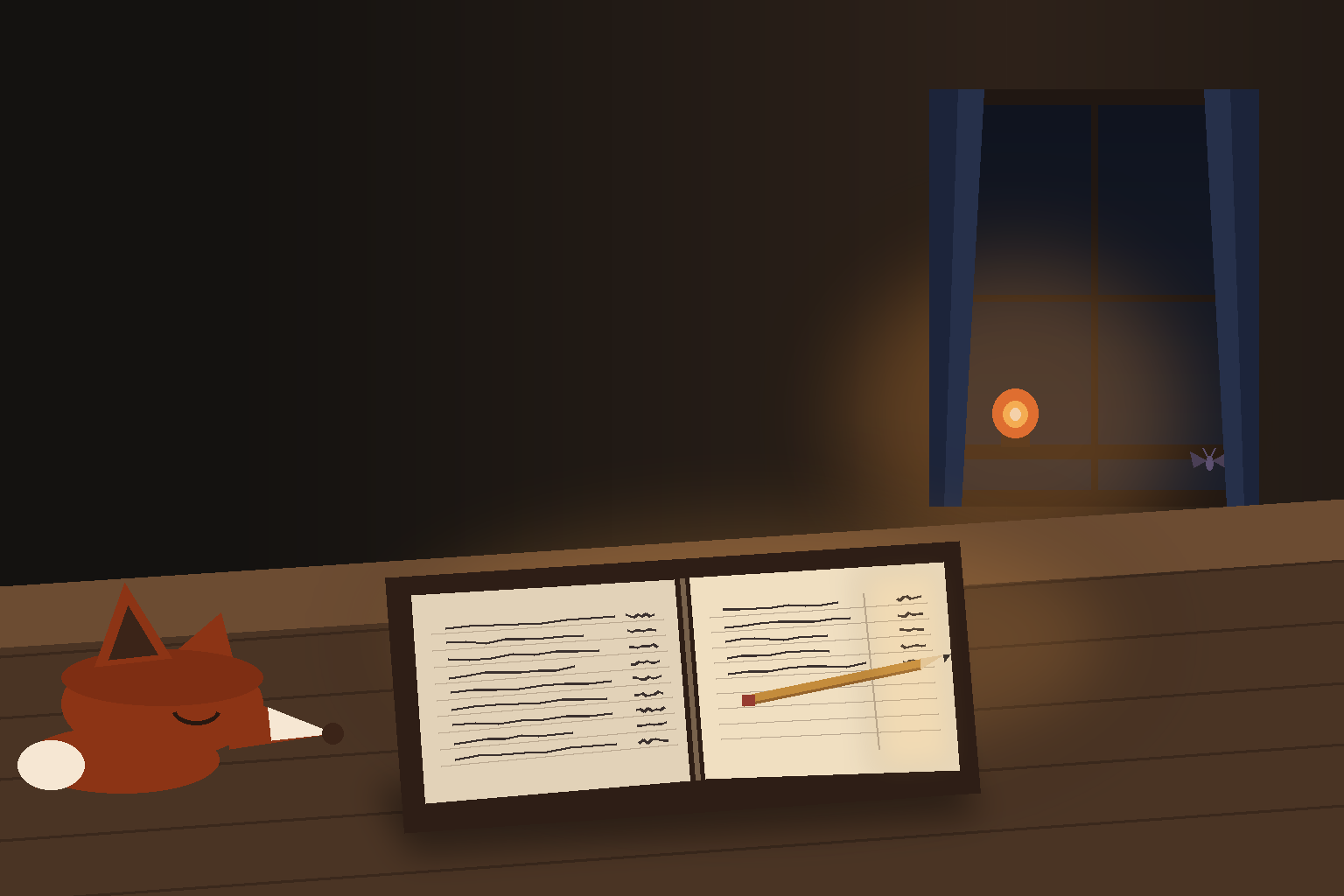
The ledger lay open on the counter where the fox had fallen asleep, and it was not taking this well.
Ledgers do not sleep. It is not in the binding. All night they hold what was written in them, which is their whole art, and all night this one held a column that stopped in the middle — nine entries added, four waiting, the pencil lying across the page like a dropped oar.
“Wake him,” the ledger said to the lamp. “The column is half added. A half-added column is not a number. It is a wound.”
The lamp, which stayed lit after closing because that was its arrangement with the room, did not flicker. “I am not a bell,” it said. “I am the light the room keeps for itself. Waking is the morning’s trade, not mine.”
“Then the shop stands unbalanced all night,” said the ledger. “Do you know what visits an unbalanced shop? Inspectors. Creditors. Rounding errors with long teeth. Every hour the total goes unfinished, the shop is less a shop.”
“The shop,” said the lamp, “is exactly as much a shop as it was at noon. It is only darker outside it.”
The ledger did not believe this. Belief is hard for a book of figures; it trusts what lands in its columns and nothing else. So it spent the night the way worry spends every night: adding the four waiting entries itself, in imagination, over and over, and getting a different catastrophe each time. A ledger can hold numbers but cannot add them — adding needs a hand — and nothing frightens a holder of things like work that needs a hand at an hour when every hand is asleep.
Past midnight, a traveler came up Market Row, late and cold and far from anywhere open. At the dark shops she did not slow. At the amber window she stopped — a moth was resting on the glass, low in the corner, as if holding a place in line — and she read the hand-lettered sign, BACK AT DAYBREAK, and stood a moment in the spill of light, the way one stands in borrowed warmth. Then she went on to her lodging, and the shop was the only shop on the row she remembered in the morning.
At daybreak the fox woke, stretched the night out of his shoulders, and finished the column in four strokes while the kettle found its voice. The total came out the same as it would have at midnight. Sums keep. It is among their few virtues: they wait without spoiling.
The bell over the door rang before the tea was poured. The traveler, of course — wanting thread, a tin of pencils, and to say that hers had been the only window with a light in it.
The ledger took the sale down in a fresh column and understood, as far as a book of figures can, what the lamp had declined to argue at two in the morning. The night had cost the shop nothing: the numbers had merely waited. The light had earned the shop a customer: the warmth had worked while everyone slept.
The moral, entered in a fresh column: No one has ever walked in off a dark street because the books were balanced. The sums can wait for morning; the window cannot wait to be warm.