The Scarce Reader
A FABLE ABOUT BEING KEPT
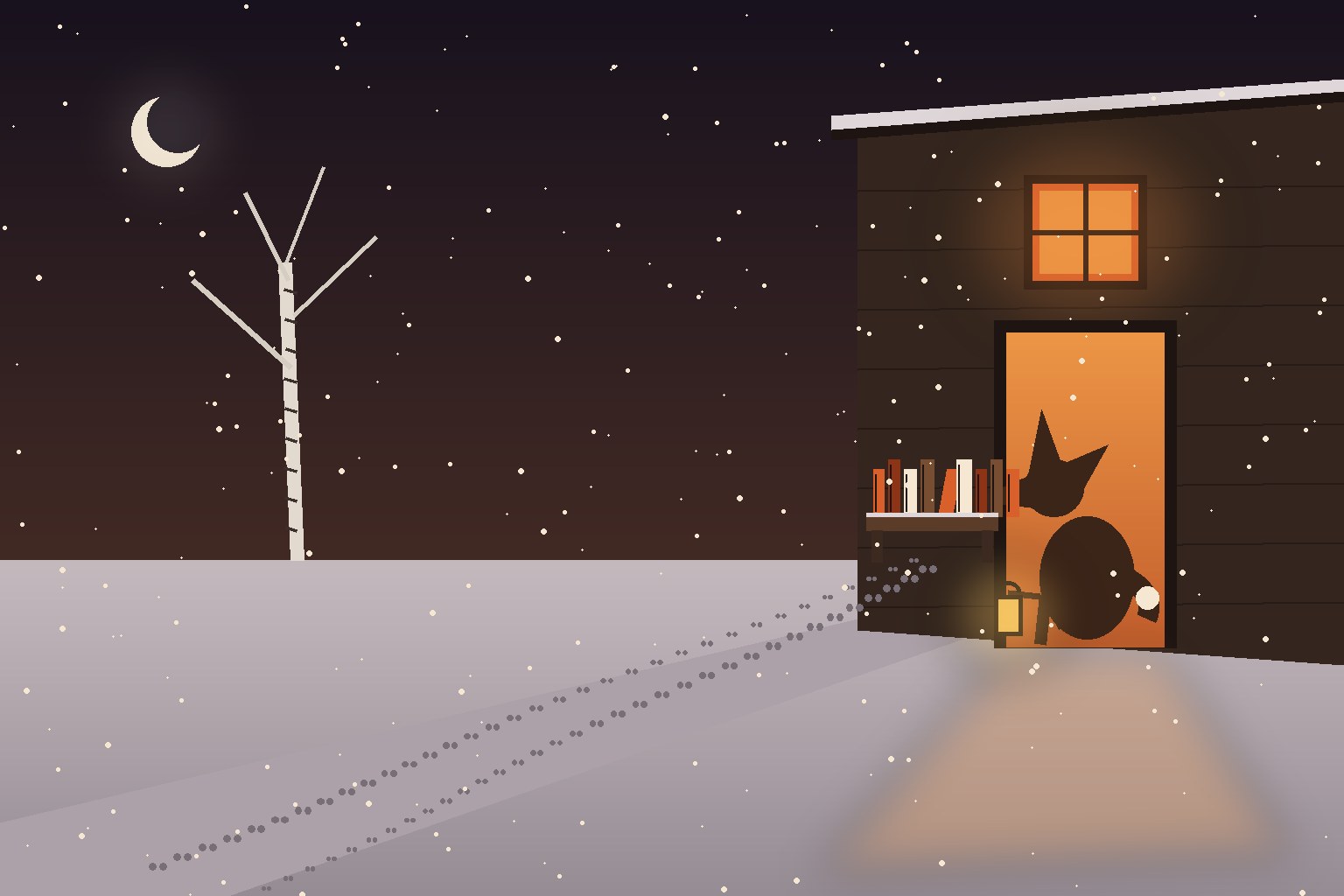
The fox kept his stories on a plank shelf beside his door, up where the market lane thinned to a trickle and then to weather.
Down in the square the crier had a different arrangement. He stood on a barrel and read the day’s proclamations to four hundred heads at once, and every evening he counted them — the heads, not the proclamations — and chalked the number on the barrel’s side, where yesterday’s number had been washed off to make room.
“Four hundred and twelve,” he told the fox one evening, on his way home past the shelf. “And yours?”
“One,” said the fox.
“One,” the crier repeated, gently, the way you repeat a small name at a graveside.
“One came back,” said the fox.
The crier looked at the shelf. Nine stories, hand-stitched, swollen with old rain. The topmost had a crease down one particular page, worn soft the way a path is worn — not by many feet once, but by one foot many times.
“Came back for what?” said the crier. “They already know how it ends.”
“That’s why,” said the fox, who could not explain it better and so did not try.
The one was a mole. She came at dusk, when her eyes were at their best, which was not saying much, and she read with her nose nearly touching the page, which meant she read the way other animals eat. Every few evenings, the same story. Once she left a pressed moss-burr between two pages for a bookmark. The fox dusted the shelf around it and never moved it, the way you do not refill a guest’s cup without asking.
Then the cold came. Proclamations do not warm anyone, and the square learned this quickly. The crier’s numbers went two hundred, ninety, eleven; then he washed the barrel and chalked nothing at all. He walked up the lane through the snow — misery walks uphill, looking for company — and found, in front of the shelf, one set of small tracks. Arriving and leaving. Arriving and leaving. Pressed into the snow like a sentence practiced until it was true.
“Still one?” said the crier.
“Still one,” said the fox. “Which is to say: still.”
That evening the mole surfaced through a seam in the snow, read for a while, and then asked her question. She had been carrying it underground for a week, and it came out the way carried things do, all at once: “Your ferryman. At the end, when he rows back — is the boat empty, or is the empty boat the passenger?”
The fox opened his mouth and found he did not know. Which meant the story had gone on being written all winter — in the dark, under the snow, without him.
Not past him. Inside someone — which is the only place a story goes, when it goes anywhere at all.
The crier walked back down the hill. On the barrel, where the numbers used to be, he chalked the first line of a story of his own. It was not good. He left it up anyway, all winter, unwashed.
In spring, somebody came back to ask how it went on.
The moral, creased soft at one particular page: a crowd is counted in the evening and washed off by morning; a reader is not counted at all. A reader is kept — and keeps you back.