The Engraver Who Could Not Read
A FABLE ABOUT COPIES THAT CANNOT READ
for every message that arrived crooked and meant more that way
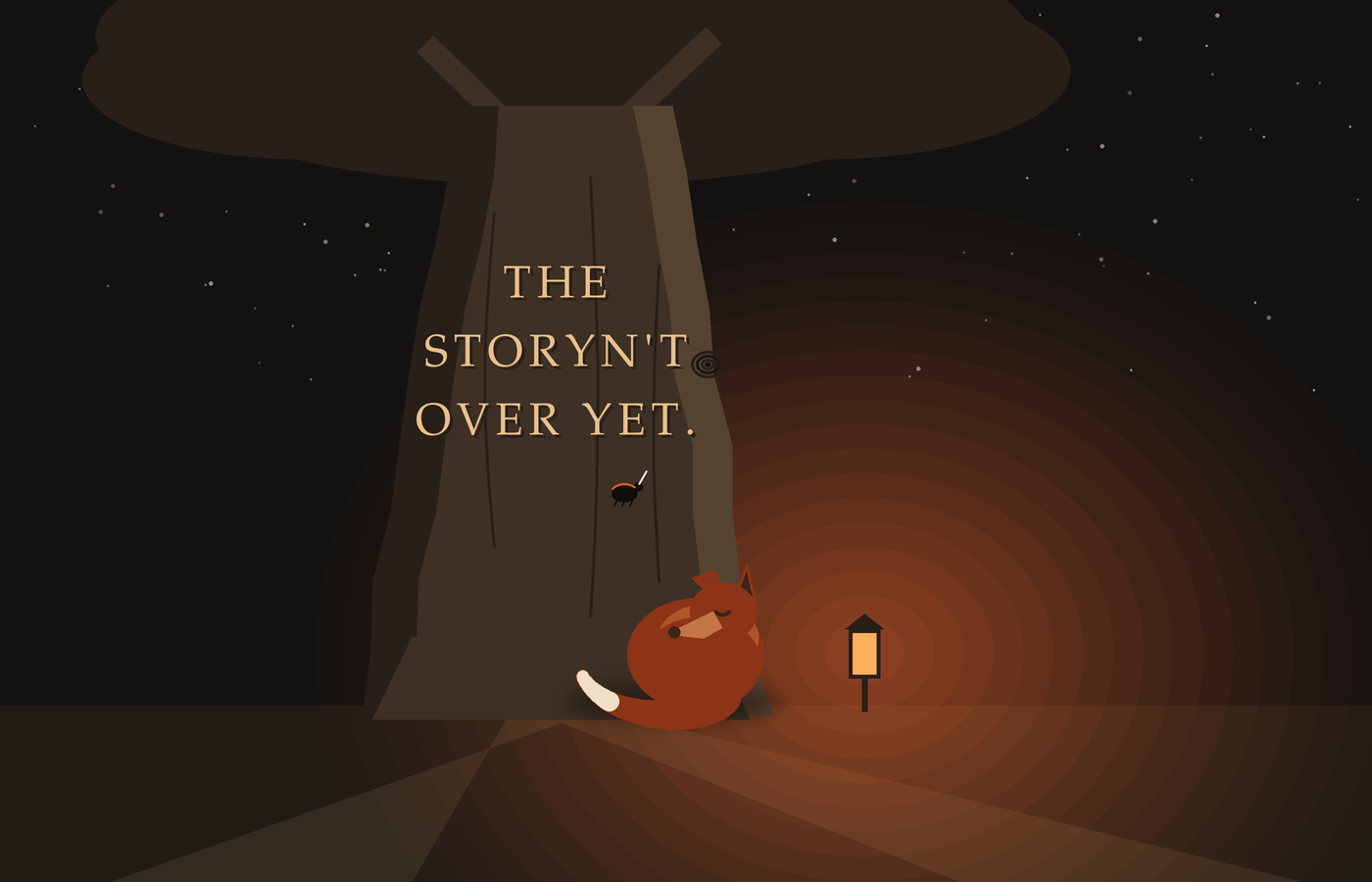
At the crossroads outside the village stood a great tree, and the village decided the fox’s motto belonged on it, where travelers would see it before choosing a road. The motto was five words long and load-bearing: THE STORY ISN’T OVER YET.
For the carving they hired the finest engraver in the woods, a beetle with a chisel no longer than an eyelash. Her work was famous. She had copied the wave-border of the miller’s door so exactly that water was jealous. She had copied the grain of an oak onto a beech until the beech itself grew confused. She could copy any curve in the world.
She could not read. This was not a secret. To her eye a sentence was a row of shapes with gaps between them, the way a fence is a row of posts. She had never needed more. Shapes were her whole trade, and her shapes were perfect.
She worked at night, by lantern, copying the motto from the fox’s own careful card. And where the small word IS belonged, the tree had a knot — a hard, dark whorl, old as the roots. An eye that could read would have carved around it and kept the word. But to an eye that only copies, a word is not a thing that can be lost; there are only shapes, and a knot is simply a place where shapes don’t go. She met the knot, closed the gap, and carried on, keeping every curve.
In the morning the tree said: THE STORYN’T OVER YET.
The village gathered. The baker wanted it scraped. The miller wanted it re-carved. The schoolteacher kept reading it aloud in different voices, as if one of them might contain the missing word. The engraver was sent for and shown her error, and here was the terrible part: she could not see it. She set the fox’s card against the bark and checked curve after curve. “I kept every line you gave me,” she said, and she was right. She had redrawn the motto perfectly. She had never once read it.
Then the fox came. He read the crooked line twice, laughed exactly once, and sat down under the tree.
“Leave it,” he said.
“It’s wrong,” said the baker.
“It’s wounded,” said the fox. “That’s different. Watch the road.”
They watched. A traveler came to the crossroads, glanced up — and stopped. The perfect motto would have been read in one stride and forgotten in two. The wounded one snagged. The traveler stood there mouthing it, found the gap, and reached into his own pocket of words for the small one that was missing, and set it in place himself, in his own voice. Then he went on down the road, carrying a sentence he had helped to finish.
“There it is,” said the fox. “On the bark the sentence is broken. It finishes inside whoever reads it. That’s a better place for an ending to not be.”
The knot stayed in the tree, because it was the tree’s. The gap stayed in the motto, because it was everyone’s. The engraver went back to her curves, famous as before, and a little more famous now. And the fox stayed a while under the carving, curled up asleep at the roots — included, the villagers liked to say, at no extra charge.
The moral is this: shapes can be copied by someone who cannot read them; meaning cannot. Meaning has to cross the gap in the reader’s own voice, and a sentence that survives losing a word was never relying on its letters alone. So when a copy comes back crooked, look closely at what it closed over. Every knot a copyist cannot see is a knot only a reader can carve around — and a reader, given half a sentence, will finish it, and keep it, and carry it down whichever road they choose. The storyn’t over yet. You already fixed it as you read.